
Basement Waterproofing
in Bucks County, PA
Basement waterproofing in Bucks County isn't one problem. It's three. Lower Bucks towns near the Delaware River floodplain deal with post-war block-and-slab construction and a high water table.
Homes along the Neshaminy Creek corridor deal with a seasonal water table that rises and falls with the season and the storm.
And Central Bucks, around Doylestown and Newtown, is full of older stone farmhouse foundations that predate modern drainage codes entirely. We know all three because we're based here, in Feasterville-Trevose, not driving in from somewhere else.
Elite Basement Solutions has worked basements across Bucks County long enough to know that a Levittown slab home, a Langhorne rancher near Neshaminy Creek, and a stone farmhouse outside Doylestown all fail differently, even when the symptom, a wet basement, looks the same from the top of the stairs.
See our full waterproofing process for how we diagnose before we quote, and read on for what's specific to this county.
Why Bucks County Basements Get Wet
Start with Lower Bucks. Towns like Bensalem, Levittown, and parts of Bristol sit close to the Delaware River floodplain, and much of that housing stock was built quickly in the 1950s and 1960s using slab and block construction, part of the mid-century Levittown-era development boom.
Concrete block foundations have hollow cores that can channel water downward once moisture gets past the exterior coating, and homes on a slab or shallow basement close to the floodplain face a naturally higher water table, especially after heavy rain or spring snowmelt. That combination, porous block plus elevated groundwater, is a common source of Lower Bucks basement seepage.
Move north and west along the Neshaminy Creek corridor, through Langhorne, Middletown Township, Northampton Township, and into Warminster, and the water problem shifts. Neshaminy Creek and its tributaries create a seasonal high water table that rises noticeably in spring and after sustained rain, then drops through summer.
A basement that's bone dry in August can take on water every March, and homeowners are sometimes surprised that a foundation with no visible crack still lets water in, because the mechanism is hydrostatic pressure pushing groundwater through the wall at its weakest points, not a single obvious failure.
Central Bucks is different again. Around Doylestown, Newtown, and the older parts of the county, you find stone foundations on farmhouses and older homes built well before modern building codes existed, some dating back over a century.
Stone and mortar are porous by nature, and without a functioning exterior drainage system, groundwater moves through the wall by capillary action rather than through one identifiable crack. These foundations often also have clay soil around them, which expands when wet and contracts when dry, adding pressure against the wall through seasonal cycles.
Clay soil, in fact, runs through much of the county regardless of which of these three zones you're in, and it's part of why sump discharge and grading matter so much here. Clay drains slowly, so water that isn't routed away from the foundation sits against it far longer than it would in sandier soil, giving it more time to find a way through.
Common Problems in Bucks County Basements
Lower Bucks block and slab seepage
Water entering through hollow block cores or slab edges near Bensalem and Levittown, often worse during high-water periods on the Delaware floodplain.
Seasonal water table intrusion along Neshaminy Creek
Basements that stay dry most of the year but take on water every spring, a hydrostatic pressure problem rather than a single-crack leak, common in Langhorne, Middletown, and Northampton Township.
Stone foundation capillary seepage in Central Bucks
Older farmhouse and estate foundations around Doylestown and Newtown letting water through porous stone and mortar, often paired with efflorescence, the white chalky mineral deposit left behind as water evaporates.
Clay soil pressure on foundation walls
Expansive clay soil throughout the county pushing against foundation walls as it swells with moisture and shrinks when dry, contributing to cracking over time in both older and newer homes.
Township permit and drainage discharge requirements
Bucks County townships each have their own rules for sump discharge location and stormwater management, and a system installed without checking local permit requirements can create a new problem with the township even after it solves the water problem.
How We Solve Them
Our waterproofing systems are matched to which of these three Bucks County conditions we find. Block and slab homes near the floodplain typically need interior drainage paired with a sump system sized for high water-table conditions. Homes along the Neshaminy corridor often need the same interior approach but sized for seasonal swings rather than constant pressure, since the system has to handle spring surges without running constantly the rest of the year.
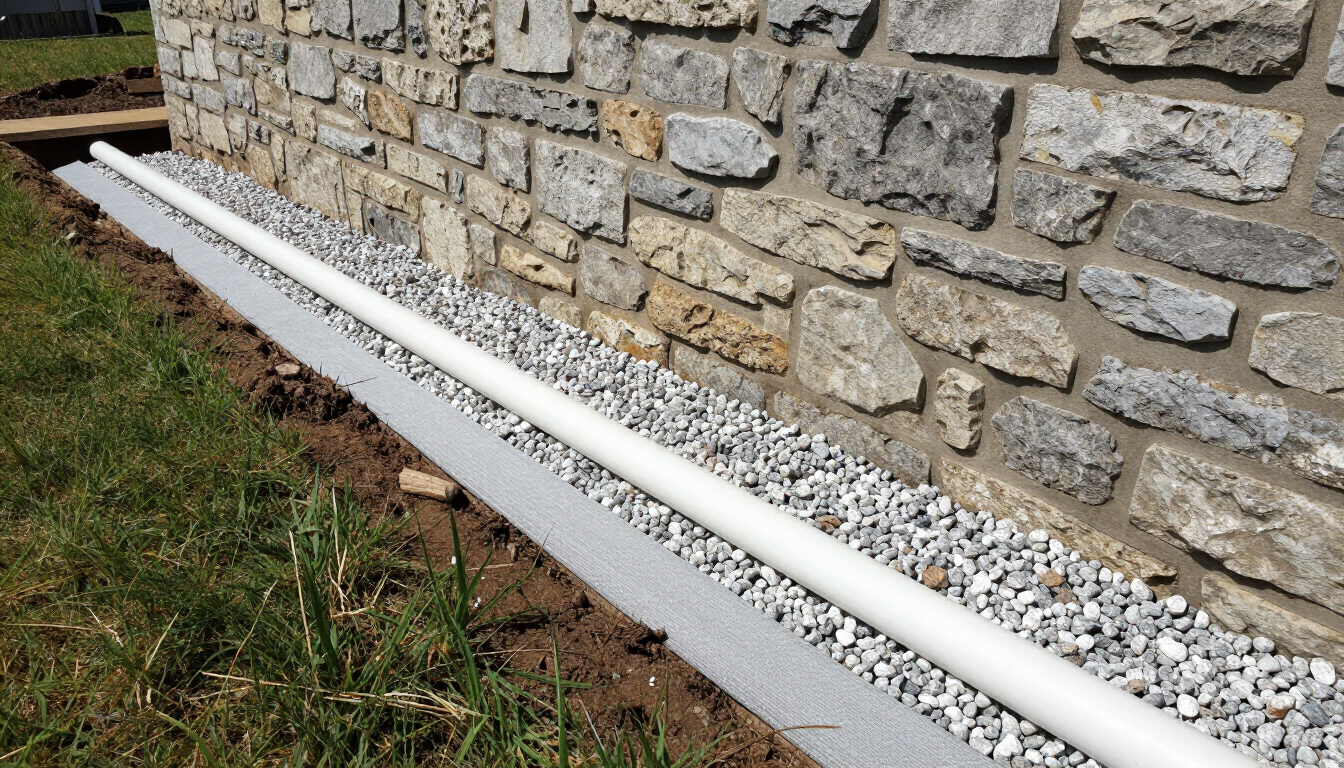
Stone foundations in Central Bucks call for a more careful approach, since the wall itself is older and more fragile than poured concrete. Our french drain installation runs along the interior base of the wall, capturing water before it reaches the floor without requiring invasive work on a historic stone foundation. Where the stone or block itself has begun to bow or crack rather than just seep, our foundation repair page covers structural stabilization, evaluated separately from the water problem.
Basements finished after a waterproofing system is installed are common in Bucks County, and our basement finishing services pick up where waterproofing leaves off, once we've confirmed the space is actually dry enough to build on.
Thanks! We will be in touch shortly.
Why Elite Basement Solutions in Bucks County
We're not a franchise that drives into Bucks County for the day. Elite Basement Solutions is based in Feasterville-Trevose, in the heart of Lower Bucks, and this is the county we know best because it's the county we're from. We've worked block foundations in Levittown, stone foundations outside Doylestown, and everything in between, and we understand the township-by-township differences in permitting and drainage requirements that a company based elsewhere would have to learn from scratch.
We're licensed and insured in Pennsylvania, PA HIC #PA209149, and every waterproofing system we install carries a lifetime warranty on workmanship and materials, covering the system itself and not foundation repair, finishing, or mold remediation. That warranty isn't transferable to a new owner.
Trusted by homeowners across Bucks County and Philadelphia.
Every job starts with a free on-site evaluation. We walk the basement, identify the mechanism bringing water in, and explain it before recommending a system, because a Levittown slab home and a Doylestown stone farmhouse need different answers even though they're both in Bucks County. Financing options are available, and we accept Visa, Mastercard, Discover, check, Zelle, and Venmo.
(800) 902-5311 · info@elitebasementsolutions.com · Emergency service available 24/7
Frequently Asked Questions
Why do basements in Bucks County flood?
Basements in Bucks County flood for different reasons depending on where in the county you are.
Lower Bucks towns like Bensalem and Levittown, close to the Delaware River floodplain, were largely built in the postwar boom on slab and block construction, and block foundations have hollow cores that channel water downward once it gets past the exterior coating, worsened by a naturally higher water table near the floodplain.
Along the Neshaminy Creek corridor, through Langhorne, Middletown Township, and Northampton Township, the water table rises seasonally, so a basement that's dry all summer can start taking on water every spring as hydrostatic pressure builds against the foundation. In Central Bucks, around Doylestown and Newtown, older stone foundations are porous by nature and let water through by capillary action rather than through one obvious crack, often combined with expansive clay soil that pushes against the wall as it swells and shrinks with moisture.
Because these are three distinct mechanisms, basement waterproofing Bucks County contractors need to identify which one, or which combination, applies to a specific property before recommending a system, which is why we always start with an on-site evaluation.
What does basement waterproofing cost in Bucks County?
Cost varies significantly depending on which of Bucks County's three basement conditions applies to your home, and we don't give a firm number without seeing the basement first. Block and slab foundations near the Lower Bucks floodplain typically need interior drainage paired with a sump system sized for high water-table conditions, which is a different scope than a stone foundation in Central Bucks that needs careful interior drainage without disturbing older masonry.
Homes along the Neshaminy Creek corridor may need a system sized for seasonal surges rather than constant pressure, which can affect sump pump sizing and discharge planning. Township permit requirements for sump discharge also vary across Bucks County, and factoring that in during the estimate avoids problems after installation.
Our cost guide outlines general pricing ranges, but the only accurate number comes from a free on-site evaluation where we've seen your specific foundation and township. Financing options are available, and every system carries a lifetime warranty on workmanship and materials, non-transferable, covering the waterproofing system itself.
Do you serve all of Bucks County?
Yes. Elite Basement Solutions is based in Feasterville-Trevose, in Lower Bucks, and we serve homeowners across the county, from the Delaware floodplain towns like Bensalem and Levittown, through the Neshaminy Creek corridor towns of Langhorne, Middletown Township, and Northampton Township, out to Central Bucks around Doylestown and Newtown.
Because we're headquartered in the county rather than commuting in from Philadelphia or somewhere further out, scheduling tends to be faster and we already understand the township-specific permit and drainage discharge rules that apply to your specific location. See our full service area for the complete list of towns and counties we cover, including parts of Montgomery County and communities across the river in New Jersey.
If your town isn't specifically named on our site, call (800) 902-5311 and ask, since coverage comes down to drive time and scheduling rather than a hard line on a map.
What towns in Bucks County do you work in most?
We work throughout Bucks County, with a concentration in the towns closest to our Feasterville-Trevose base: Feasterville, Bensalem, Langhorne, Levittown, Yardley, and the Middletown and Northampton Township areas along the Neshaminy Creek corridor. We also regularly work in Central Bucks around Doylestown and Newtown, where older stone foundations require a different diagnostic approach than the block and slab construction common closer to the Delaware.
Each of these areas has its own dedicated page where relevant, covering the specific housing stock and water conditions we see there, because a Levittown block foundation and a Doylestown stone foundation aren't the same job even though both towns are in Bucks County. If you don't see your specific town listed, that doesn't mean we don't serve it. It usually just means the town hasn't had a dedicated page built yet, and a quick call will confirm coverage and scheduling.
Is there a difference between waterproofing an old and new home in Bucks County?
Yes, and the difference comes down to foundation material and how the wall lets water through. Older homes in Bucks County, particularly the stone farmhouses common around Doylestown and Newtown, have porous stone and mortar walls that let water in through capillary action across a broad area, plus often no functioning exterior drainage system at all since none existed when the house was built.
Newer homes, especially the postwar block and slab construction common in Levittown and Bensalem, have a different vulnerability: hollow-core concrete block that channels water downward internally, releasing it through a mortar joint or crack near the floor rather than through the wall's face directly. Older stone foundations generally require a gentler interior approach that doesn't disturb fragile, irreplaceable masonry, while block foundations can sometimes tolerate more direct sealing of the block cores themselves.
Both types can benefit from interior drainage systems, but the sizing, placement, and sump discharge planning differ based on the age and material of the foundation, which is exactly why an on-site evaluation matters more than a generic quote.
Bucks County Towns We Serve
Feasterville-Trevose · Bensalem · Langhorne · Levittown · Yardley · Newtown · Doylestown · Warminster · Middletown Township · Northampton Township · Bristol
Just across the county line, we also serve Northeast Philadelphia and Montgomery County, or view all service areas.