
Foundation Repair
in Philadelphia and Bucks County
Foundation repair in Philadelphia and Bucks County has to account for two very different building eras standing a few miles apart: nineteenth-century rowhomes built on rubble-stone and brick with shared party walls, and post-war block foundations poured in developments like Levittown in the 1950s and 1960s.
Elite Basement Solutions reads the crack, the wall, and the foundation type before recommending a repair, because those two foundation types fail differently and need different fixes.
This page covers how to read a foundation crack, what causes walls to bow or settle in this region, which repairs we perform, and when the right answer is a structural engineer rather than a contractor.
Philadelphia Row Homes vs.
Post-War Bucks County Foundations
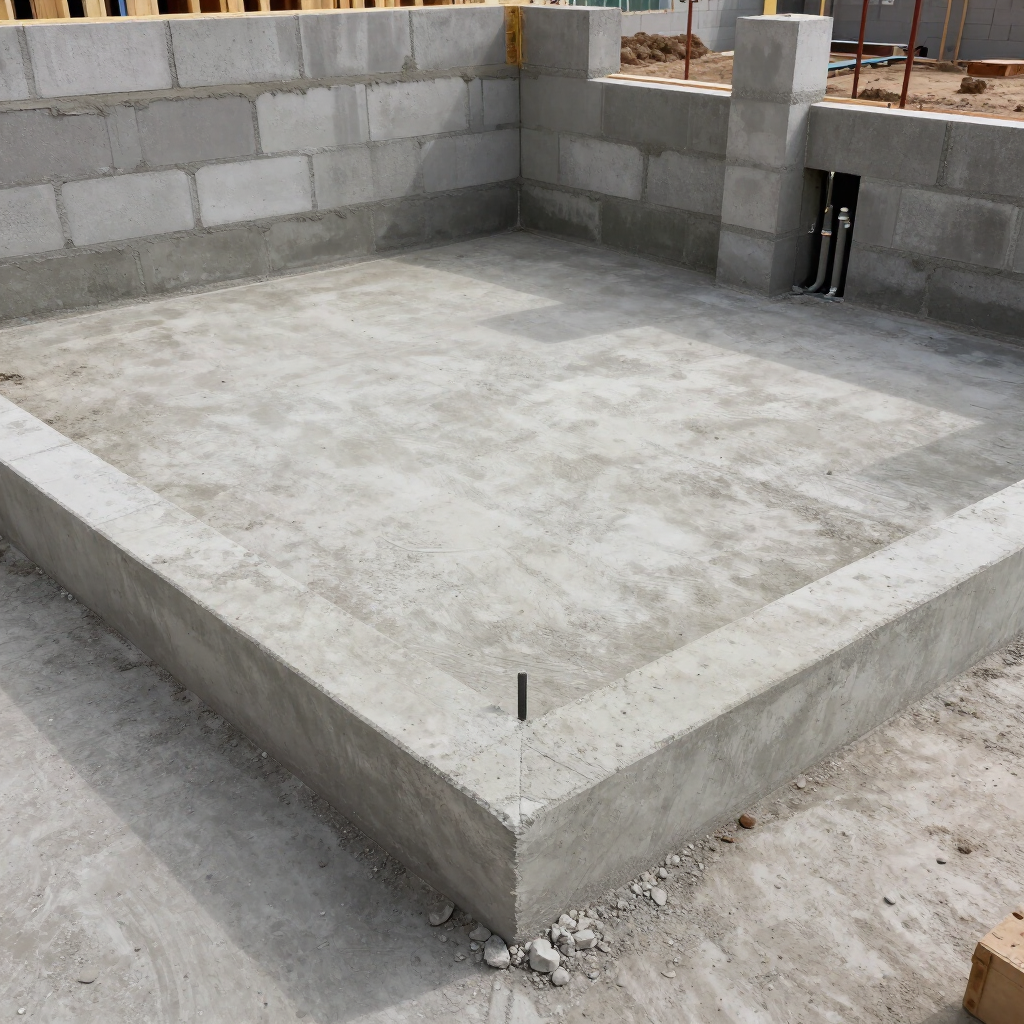
Rowhome Foundations: Rubble-Stone, Brick, & Party Walls
Much of Philadelphia's older housing stock — in neighborhoods like Fishtown, Kensington, and parts of the Far Northeast covered on our Philadelphia basement waterproofing page — sits on rubble-stone or brick foundations built well before poured concrete became standard.
These walls were assembled from irregular stone or brick set in lime mortar, which was strong for its time but is more porous and more prone to mortar joint deterioration than a poured wall.
Many of these rowhomes also share a party wall with the house next door, which changes how a foundation problem shows up and how it can be repaired.
Movement or settlement on one side of a shared wall can appear as a crack pattern on both properties, and any excavation or exterior work has to account for the neighboring foundation, not just the property being repaired.
Underpinning or exterior work on a party wall situation typically requires coordination that a detached suburban home never has to deal with.
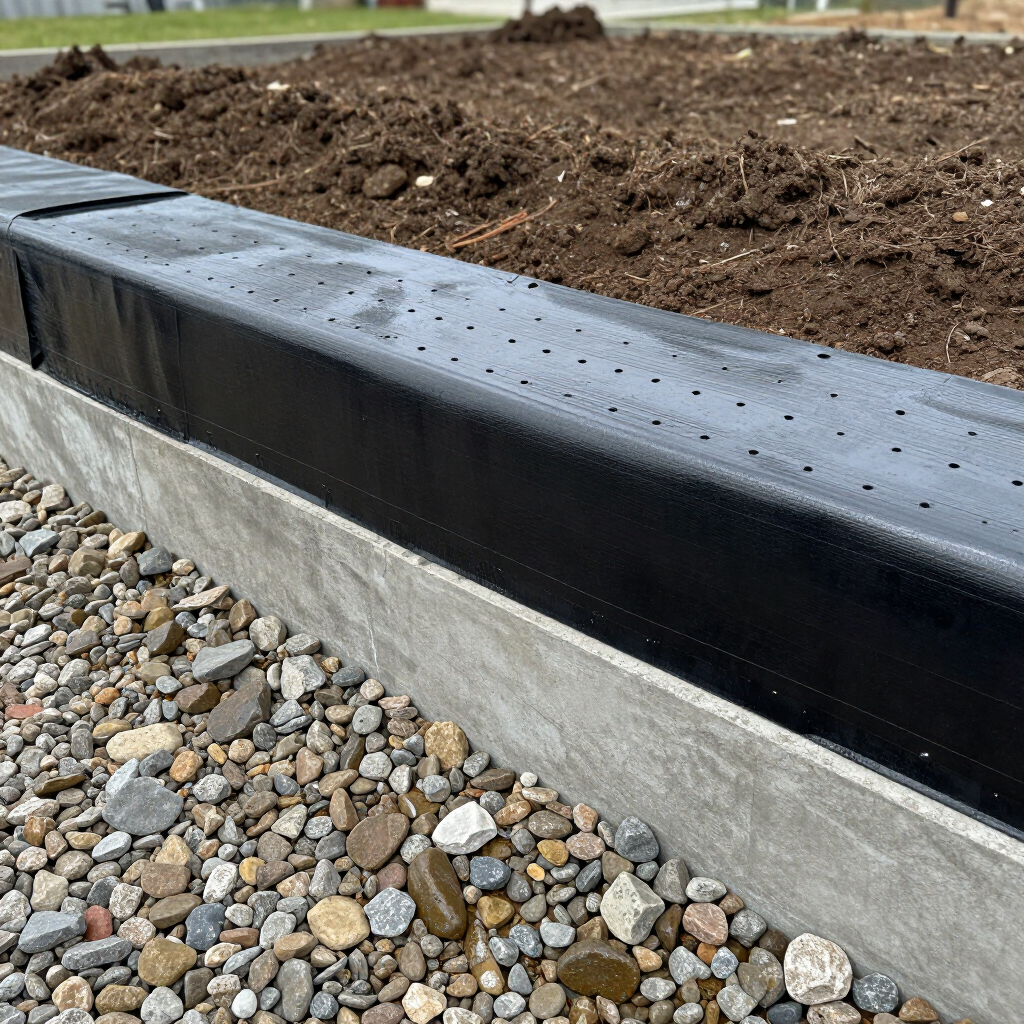
Post-War Block Foundations in Levittown and Lower Bucks
Developments built in the 1950s and 1960s across Levittown, Bristol Township, and much of Lower Bucks County used concrete block foundations, a very different structure than the rowhome stock closer to the city.
Block foundations fail differently: through the hollow cores of the block itself, through mortar joints between courses, or through horizontal cracking when lateral soil pressure pushes against the wall over time.
These foundations were built to the standards and expectations of their era, which did not always account for the clay-heavy soil and seasonal water table swings common through this part of Bucks County.
Decades later, that combination — soil that expands when wet and holds water against the wall — is a common driver of the bowing and horizontal cracking we see in block foundations in these developments.
See how homeowners across Philadelphia and Bucks County describe their experience on the
reviews page.
How to Read a Foundation Crack
Not every crack means the same thing, and reading the pattern correctly is the first step in any foundation repair evaluation.
Vertical Cracks
A vertical crack running relatively straight up and down a foundation wall is often the least structurally significant pattern, typically caused by normal concrete shrinkage as it cures, or minor settling that has already stabilized. Vertical cracks can still let water in, especially under hydrostatic pressure, but they are less likely to indicate an ongoing structural problem than the other two patterns.
Horizontal Cracks
A horizontal crack running across a foundation wall, particularly at or near the mid-height of the wall, is one of the more serious patterns we see, and it typically points to lateral soil pressure pushing against the wall from outside. This is common in the clay-heavy soils of Lower Bucks County, where expansive clay swells when saturated and applies steady outward pressure on a basement wall. A horizontal crack often accompanies visible bowing and needs a structural evaluation, not just a patch.
Stair-Step Cracks
A stair-step crack follows the mortar joints of a block or brick wall in a diagonal, step-like pattern rather than running straight through the material. This pattern is especially common in the rubble-stone and block foundations of this region and usually indicates differential settlement — one section of the foundation settling at a different rate than the section next to it, often due to uneven soil support or a settling footing below.
When a Crack Is Cosmetic
Not every crack requires foundation repair. A short, hairline vertical crack with no active water intrusion, no width change over time, and no accompanying signs of settlement or bowing may be a cosmetic concern rather than a structural one. We measure crack width, check for signs of active movement, and look at the surrounding wall condition before recommending any repair — including telling a homeowner when monitoring, rather than immediate repair, is the reasonable next step.
Foundation Repair Methods We Perform
Foundation Crack Repair
Basement wall crack repair generally means one of two injection methods. Epoxy injection bonds a crack structurally and is used when the crack is not actively moving and structural strength needs to be restored.
Polyurethane injection expands to fill a crack and is more flexible, making it the better choice for a crack that may still see minor movement or is actively letting in water. We choose between the two based on what the crack is actually doing, not by default.
Bowing Wall Repair
Bowing basement wall repair most often starts with carbon fiber basement wall repair — straps that reinforce a bowing wall from the interior and work when wall deflection is under about two inches.
Beyond that threshold, the wall has moved too far for carbon fiber alone to be the right answer. Steel I-beam bracing and wall anchor systems address more significant bowing, with anchors in particular requiring accessible exterior soil to set the anchor plate.
We are direct about the deflection limits of each method rather than fitting the wrong repair to a wall that has moved further than a strap can safely correct.
Underpinning and Settlement Correction
When a section of foundation has settled due to inadequate footing support or unstable soil beneath it, underpinning — extending the footing deeper to more stable soil or bearing capacity — stabilizes the foundation and can, in some cases, allow a settled section to be lifted back toward its original position.
This is more involved work than crack injection or wall reinforcement and is reserved for foundations showing measurable settlement, not general cracking.
See more completed work on the
project gallery page.
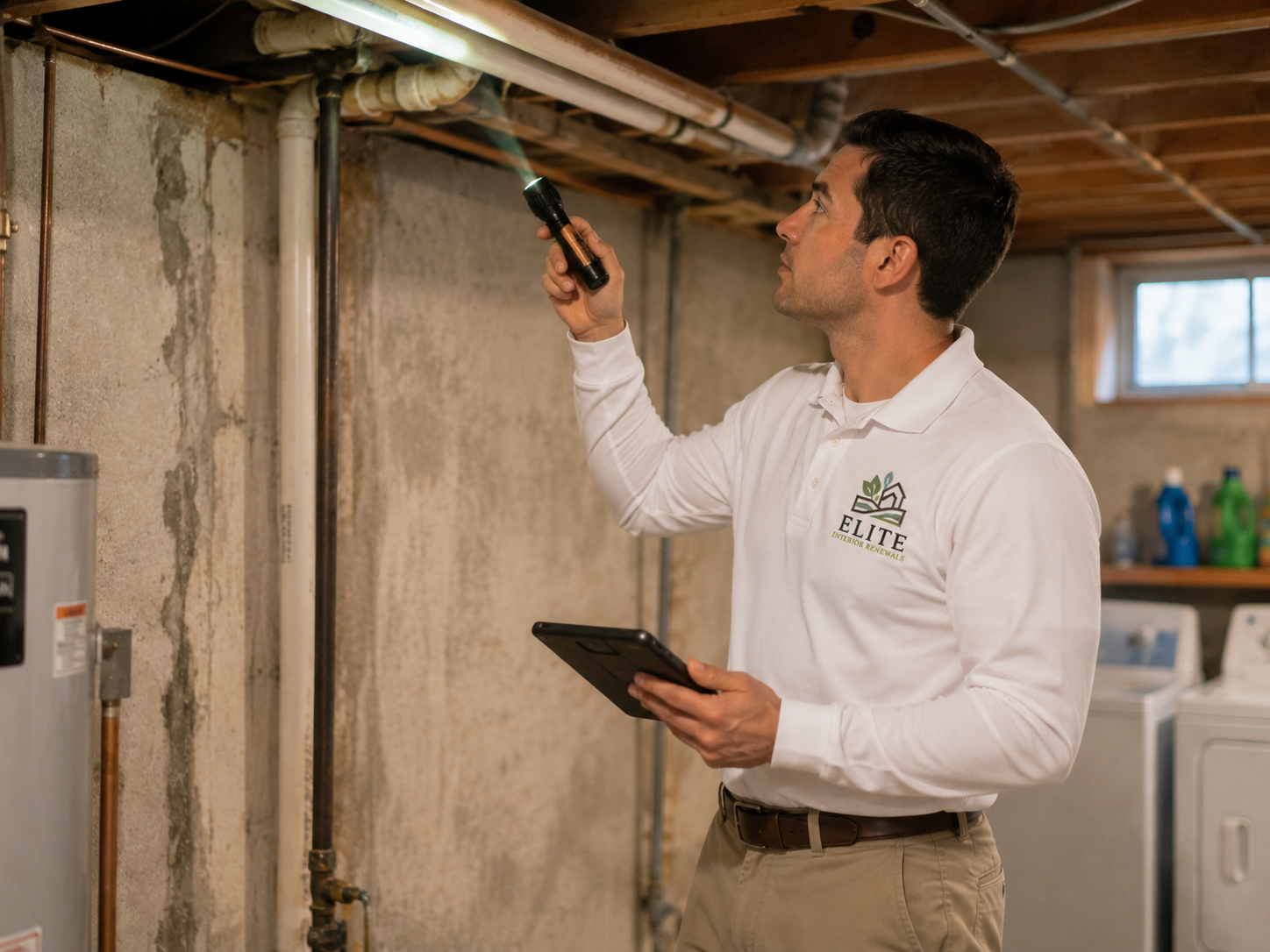
When You Need a Structural Engineer, Not a Contractor
We say this directly because it matters: some foundation problems are beyond what a waterproofing and foundation repair contractor should diagnose or fix alone.
Significant wall deflection beyond what carbon fiber or standard anchor systems can safely correct, uneven settlement affecting the structural integrity of the home above, or cracking that continues to widen despite stabilization work are all situations where an independent structural engineer's assessment should come before any repair contract is signed.
We will tell a homeowner when that is the case rather than proceeding with a repair that is outside the right scope for a contractor to perform alone. In some cases, we work alongside a structural engineer's plan to execute the repair once an assessment has been completed.
What Foundation Repair Does Not Cover
Foundation repair addresses the structural condition of the wall or footing — cracks, bowing, and settlement. It is a different scope of work from basement waterproofing, which addresses water management through drainage systems, and the two are sometimes needed together and sometimes needed separately.
A structurally sound wall can still leak through a cove joint, and a structurally compromised wall can be bone dry until the next storm. We evaluate both during a foundation assessment and are specific about which scope of work is actually driving the problem you called about.
Licensed and Insured for Your Peace of Mind
Elite Basement Solutions is based in Feasterville-Trevose, and homeowners searching for foundation repair near me are typically within a short drive — we perform foundation repair Bucks County-wide and throughout Philadelphia and Montgomery County, PA, as well as Chester and Delaware counties, PA, and all of New Jersey.
We are licensed and insured in both states — PA HIC #PA209149 and NJ HIC #13VH14034100 — and offer emergency service available 24/7 for active structural concerns such as a rapidly widening crack or sudden wall movement.
Financing options are available for foundation repair projects, since structural work is rarely a small expense and rarely convenient to plan for in advance.
Thanks! We'll be in touch to schedule your free basement evaluation.
Reach us directly through the
contact page to schedule an assessment at a time that works for you.
What Foundation Repair Costs
Foundation repair cost depends on the type of repair — crack injection, carbon fiber reinforcement, wall anchors, or underpinning — the length of wall affected, and whether the foundation is rubble-stone, brick, or block. See the
foundation repair cost page for a full breakdown, or request a free assessment for a number specific to your foundation.
Frequently Asked Questions
How do I know if my foundation needs repair?
Signs your foundation may need repair include cracks wider than about a quarter inch, cracks that continue to grow over time, horizontal cracking across a foundation wall, visible bowing or inward movement of a wall, doors and windows that have started sticking or no longer close square, and stair-step cracking along mortar joints in a block or brick foundation.
Any one of these on its own is worth having evaluated, and several together generally point to an active structural issue rather than normal settling.
Not every crack is a foundation repair emergency. Short, hairline vertical cracks with no water intrusion and no measurable change over time are often cosmetic, caused by ordinary concrete curing rather than ongoing structural movement.
The distinction matters because it changes both the urgency and the cost of what needs to happen next.
The most reliable way to know what you are dealing with is a free on-site foundation assessment, where we measure crack width, check for active movement, and identify whether the pattern points to settlement, lateral soil pressure, or something cosmetic. Call (800) 902-5311 to schedule an assessment across Philadelphia, Bucks County, or Montgomery County.
What does foundation repair cost in Philadelphia?
Foundation repair cost in Philadelphia depends heavily on the repair method needed and the foundation type involved.
A single crack injection is on the lower end of the cost range, carbon fiber strap reinforcement for a bowing wall costs more depending on the length of wall affected, and wall anchor systems or underpinning for settlement issues represent the higher end, given the excavation and structural work involved.
Philadelphia's rowhome foundations add a variable that suburban homes do not always have: rubble-stone or brick construction, and in many cases a party wall shared with the house next door.
Repair work on a shared wall sometimes requires coordination with the neighboring property, which can affect both the scope and the cost compared to a detached home with the same crack pattern.
Because the right repair method depends entirely on what the crack pattern and wall condition actually show, we do not quote foundation repair over the phone.
A free structural assessment identifies the specific repair needed and gives an accurate number for your foundation. Financing options are also available. Call (800) 902-5311, or see the foundation repair cost page for a full cost breakdown.
Is foundation repair covered by homeowners insurance?
Standard homeowners insurance policies typically do not cover foundation repair when the cause is gradual settling, hydrostatic pressure, or normal soil movement over time, since most policies treat these as maintenance issues rather than a sudden, covered peril.
Coverage is more likely if the foundation damage resulted from a specific, sudden event the policy names, such as a burst pipe or certain storm damage, but even then, coverage details vary significantly by policy and insurer.
Because we are a contractor and not an insurance adjuster, we cannot tell a homeowner definitively whether their specific policy covers a specific repair.
What we can do is provide a clear, documented assessment of the foundation condition, the likely cause, and the recommended repair, which is the kind of documentation an insurance company typically asks for when a claim is filed.
If you believe your foundation damage may be covered, the most reliable path is to contact your insurance company directly with our assessment in hand and ask them to evaluate the claim before repair work begins.
We are glad to provide that documentation. Financing options are also available for repairs that are not covered. Call: (800) 902-5311 to schedule a free assessment.
How long does foundation repair take?
Foundation repair timelines vary widely depending on the method. Crack injection, whether epoxy or polyurethane, is typically completed in a single day for most residential cracks, since the process involves preparing the crack, injecting the material, and allowing it to cure.
Carbon fiber strap installation for a bowing wall usually takes one to two days depending on the number of straps and the length of wall involved.
Wall anchor systems and underpinning take longer, generally several days to more than a week, because they involve exterior excavation to place anchor plates or extend footings to more stable soil. Weather can also affect timelines for any work that requires exterior excavation, particularly during winter months when frozen ground slows digging.
We provide a specific timeline as part of your assessment once we know exactly which repair method your foundation needs, rather than giving a generic estimate that may not reflect the actual scope of work.
Call (800) 902-5311 to schedule a free assessment and get a timeline specific to your project.
Can I stay in my house during foundation repair?
Yes, in the large majority of foundation repair projects, homeowners stay in the house during the work. Interior repairs like crack injection and carbon fiber strap installation are localized to the basement or foundation wall and do not affect the livability of the rest of the home.
Most homeowners continue using their basement and the rest of the house normally throughout this type of work.
Exterior work such as wall anchor installation or underpinning involves more disruption outside the home — excavation equipment, temporary landscaping impact, and noise during work hours — but this work does not typically require homeowners to leave the property. In rowhome situations involving a shared party wall, we coordinate scheduling and access with the neighboring property as needed, which is worth discussing during your assessment if that applies to your home.
We walk through what to expect for your specific repair, including any temporary access limitations to the work area, before the project starts, so there are no surprises once the crew arrives. Call (800) 902-5311 to schedule a free foundation assessment.