
Basement Waterproofing
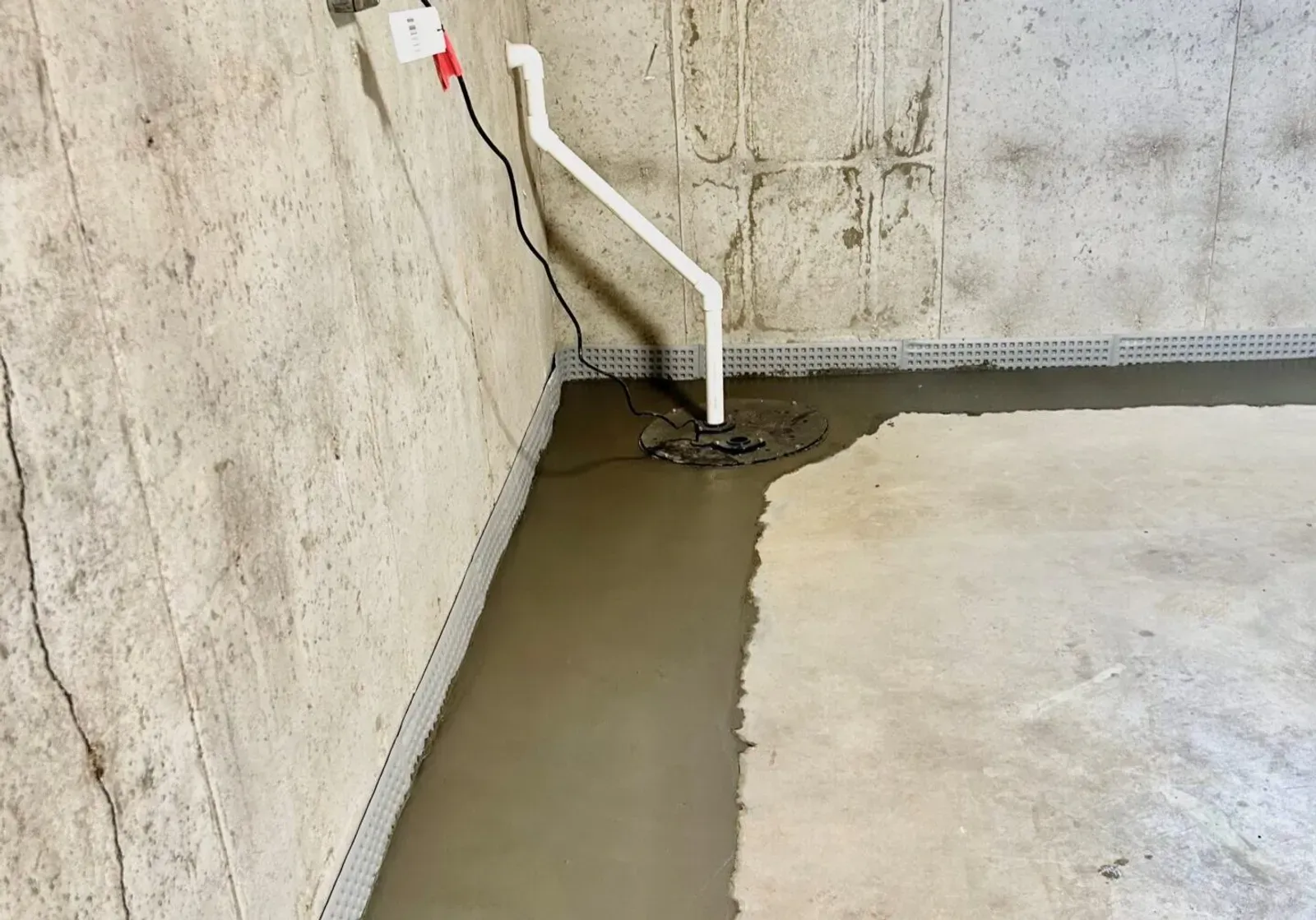
Elite Basement Solutions is a basement waterproofing and foundation repair contractor based in Feasterville-Trevose, working across Bucks County, Montgomery County, and Philadelphia. When homeowners search for waterproofing contractors near me, most are looking for someone who explains why the basement is wet before selling a system to fix it — that is the order we work in, every visit, on every job.
A wet basement in Lower Bucks or Northeast Philadelphia rarely has one simple cause. It might be hydrostatic pressure pushing groundwater against the foundation after a heavy rain, a failed cove joint where the wall meets the slab, a clogged downspout dumping water at the foundation, or a sump pump that quietly stopped working months ago. Before we recommend a fix, we walk the basement, check the grading outside, run water where we can, and identify the actual path the water is taking. Then we tell you what we found — including when the fix is smaller than expected.
Protect Your Home from Water Damage
Why Basements Flood in Bucks County and Philadelphia
Hydrostatic Pressure
Hydrostatic pressure is the force groundwater exerts against a foundation wall or slab when the water table rises faster than the soil can drain it away.
In sandy, fast-draining soil, that pressure dissipates quickly. In the clay-heavy soils common through Lower Bucks County — around Neshaminy Creek, the Route 1 corridor, and much of Feasterville-Trevose, Langhorne, and Southampton — clay particles pack tightly and drain slowly, so water pools against the foundation and stays there under pressure for days after a storm.
That pressure pushes water through any available path: a porous concrete block, a hairline crack, a tie-rod hole left over from when the foundation forms were poured, or — most often — the cove joint.
Homeowners sometimes assume a wet basement means a crack somewhere, but a foundation wall with no visible cracks at all can still let in a steady amount of water purely from hydrostatic pressure working through the pores of the concrete itself.
Cove Joint Seepage
The cove joint is the seam where the vertical foundation wall meets the horizontal basement floor slab.
It is not one continuous pour — the wall goes in first, the slab goes in later, and the two are never perfectly bonded. Over years of freeze-thaw cycles and hydrostatic pressure, that seam opens slightly and becomes the single most common entry point for basement water in older homes across this region.
We flag this specifically because it is so often misdiagnosed. A homeowner sees water along the base of the wall and assumes the wall itself is failing, then gets quoted a full wall waterproofing membrane or exterior excavation for a problem that a properly installed interior drain along the cove joint would resolve for a fraction of the cost.
Reading where the water actually appears — right at the wall-floor seam, versus mid-wall, versus through a specific crack — is the first thing we check on every evaluation.
Water Table & Grading Issues
The water table — the depth below ground where soil is fully saturated — rises and falls seasonally and after major storms. Homes closer to the Delaware River, Neshaminy Creek, and other low-lying parts of the service area sit closer to a high water table for more of the year, which means more consistent hydrostatic pressure on the foundation even without a specific storm event.
Above ground, poor grading and downspouts that dump water within a few feet of the foundation, plus window well drainage that was never properly tied in, all add water directly at the foundation before it has a chance to drain naturally. In Philadelphia rowhomes especially, decades of pavement, additions, and shared party walls have often altered the original grading in ways that push more water toward the foundation than the house was originally built to handle.
Efflorescence — the white, chalky mineral deposit left behind when that water evaporates through the wall — is often the first visible sign homeowners notice, long before wall seepage becomes obvious as standing water on the floor.
Interior vs. Exterior Basement Waterproofing
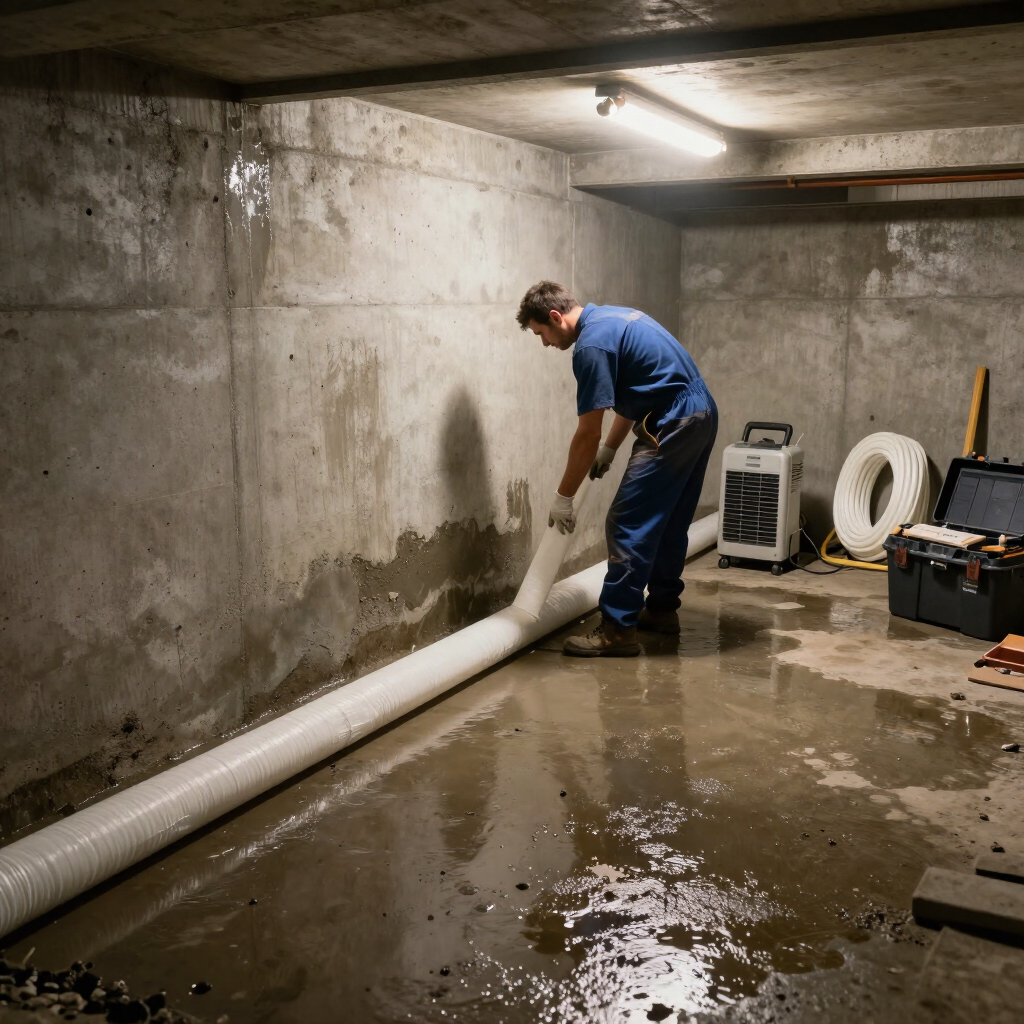
Interior Basement Waterproofing
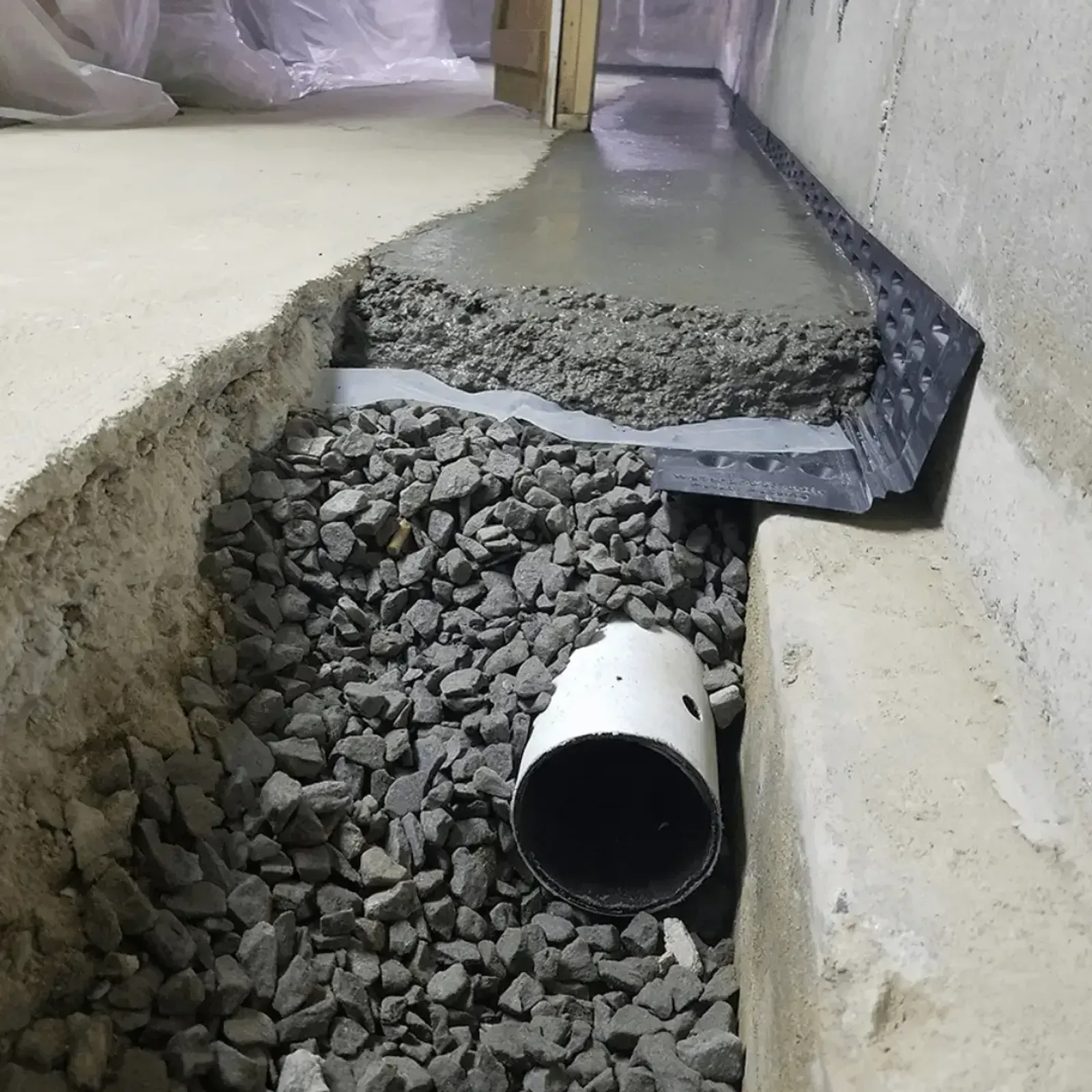
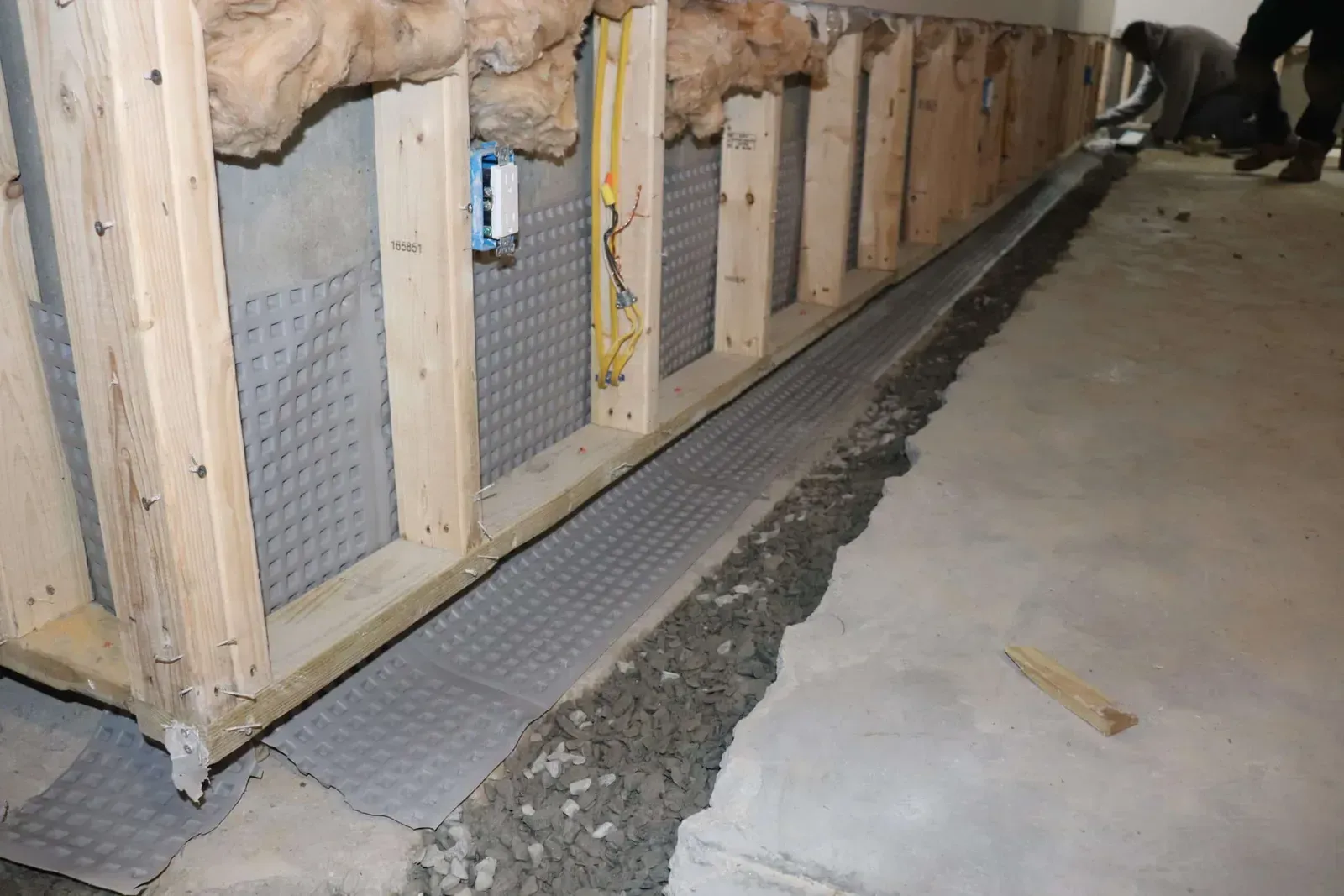
Interior basement waterproofing manages water after it has already reached the foundation wall, intercepting it at the cove joint or through the wall itself and routing it to a sump pump before it ever reaches the floor.
This typically means cutting a trench along the interior perimeter of the basement, installing a drainage channel below the slab, and connecting it to a sump basin.
Interior systems are less invasive, faster to install, and generally less expensive than exterior excavation, because the work stays inside the basement and does not disturb landscaping, walkways, or hardscaping outside.
For most cove-joint seepage and general hydrostatic pressure cases in this region, an interior French drain paired with a properly sized sump pump resolves the problem.
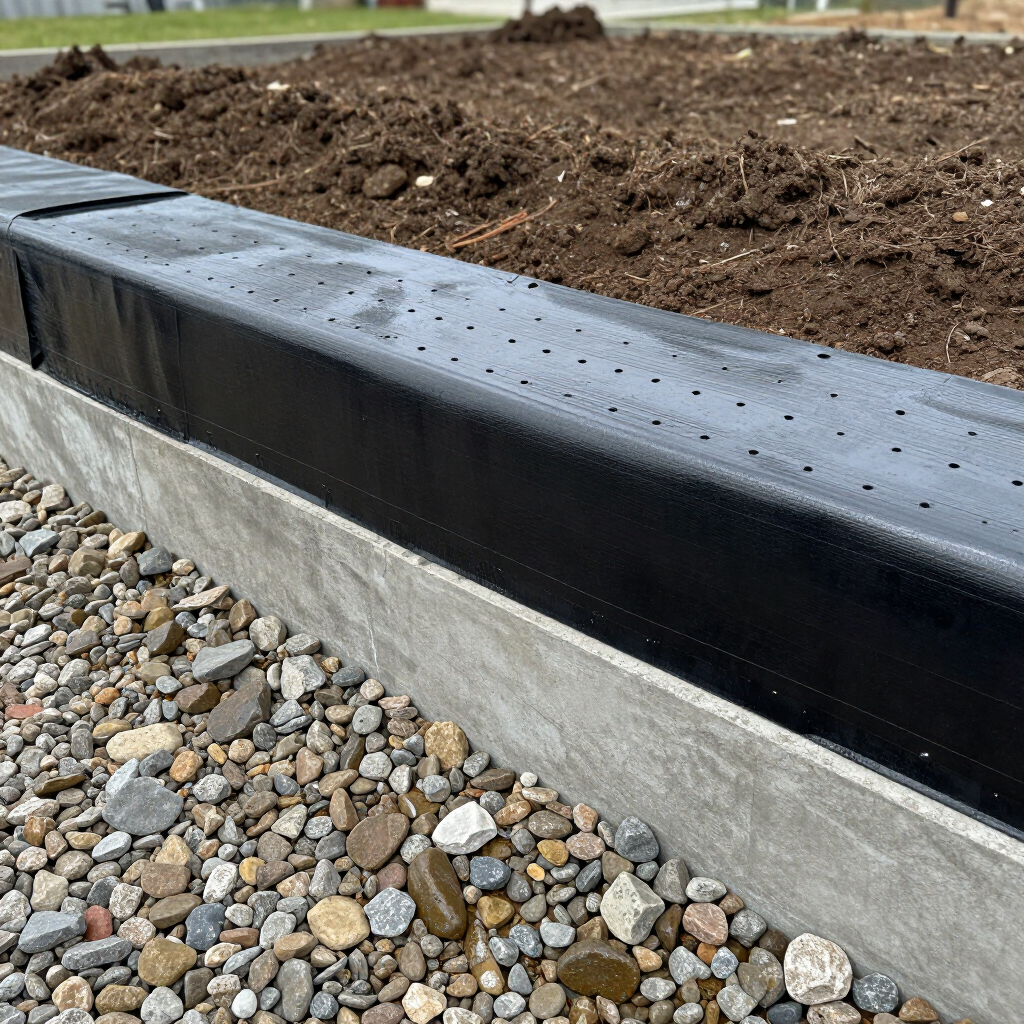
Exterior Foundation Waterproofing
Exterior waterproofing intercepts water before it ever reaches the foundation wall, typically through excavation along the outside of the foundation, installation of a footing drain at the base of the wall, application of a waterproof membrane to the exterior wall surface, and backfilling with gravel that lets water drain down to the footing drain rather than through the wall.
Exterior work is more invasive and more expensive, since it involves excavation equipment, landscaping restoration, and in rowhome and tight-lot situations, careful coordination around shared walls, utility lines, and property boundaries.
It is the right call when the wall itself is actively deteriorating, when there is significant bowing or structural movement that needs to be addressed from outside, or when there is no interior floor space to work with, such as a slab poured directly against footings with no accessible perimeter.
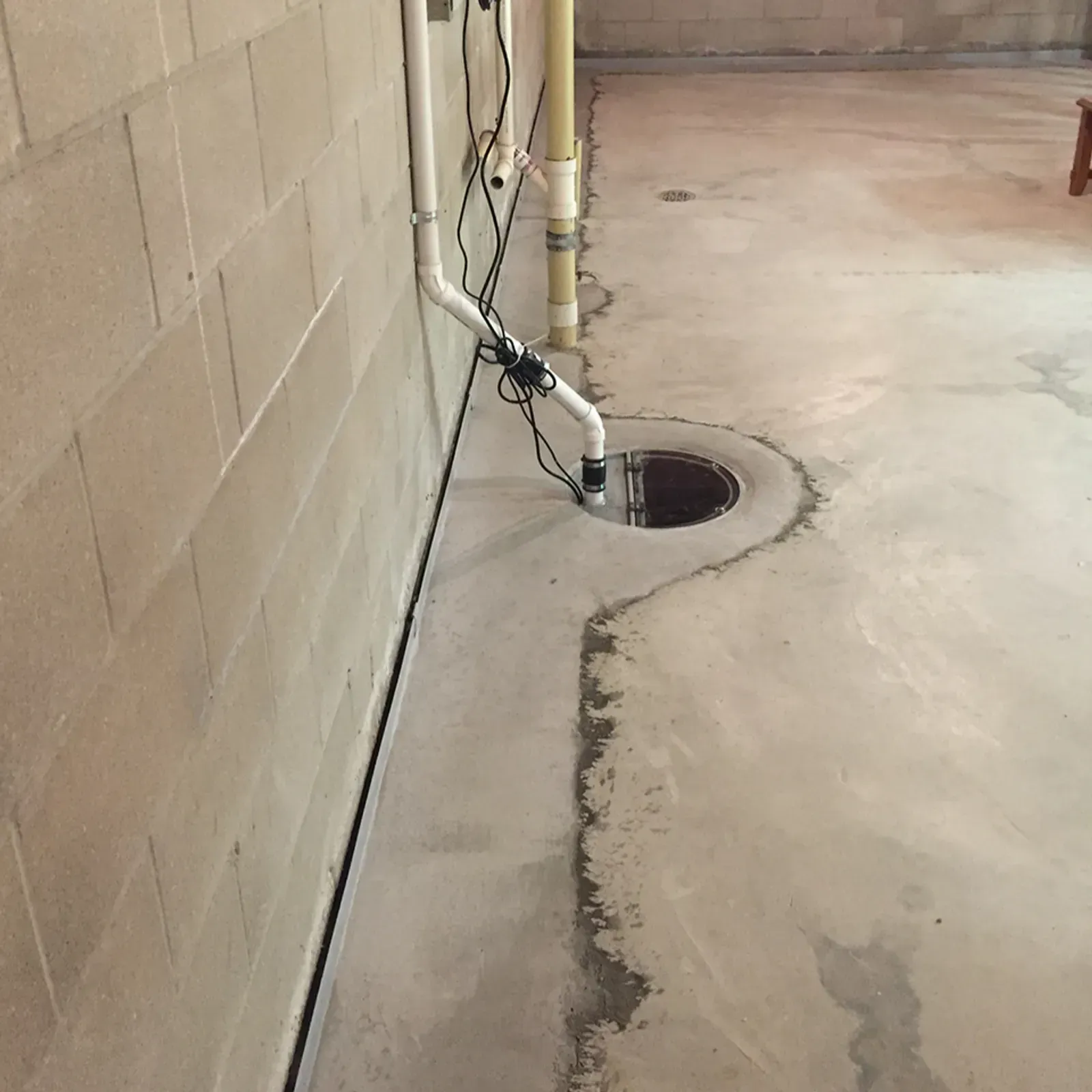
When Interior Is the Wrong Answer
We are direct about this because most companies are not: an interior drain does not fix a structurally compromised wall. If a foundation wall is bowing, cracking horizontally, or showing signs of active lateral pressure from expansive soil, installing an interior drain treats the water symptom while leaving a structural problem in place.
In that situation, the honest recommendation is foundation repair— carbon fiber reinforcement, wall anchors, or in more severe cases, exterior excavation and wall rebuilding — before or alongside any drainage work.
We would rather walk a homeowner through why an interior system is not the right fix than install one anyway and have the same wall fail again in three years.
What a Basement Waterproofing System Includes
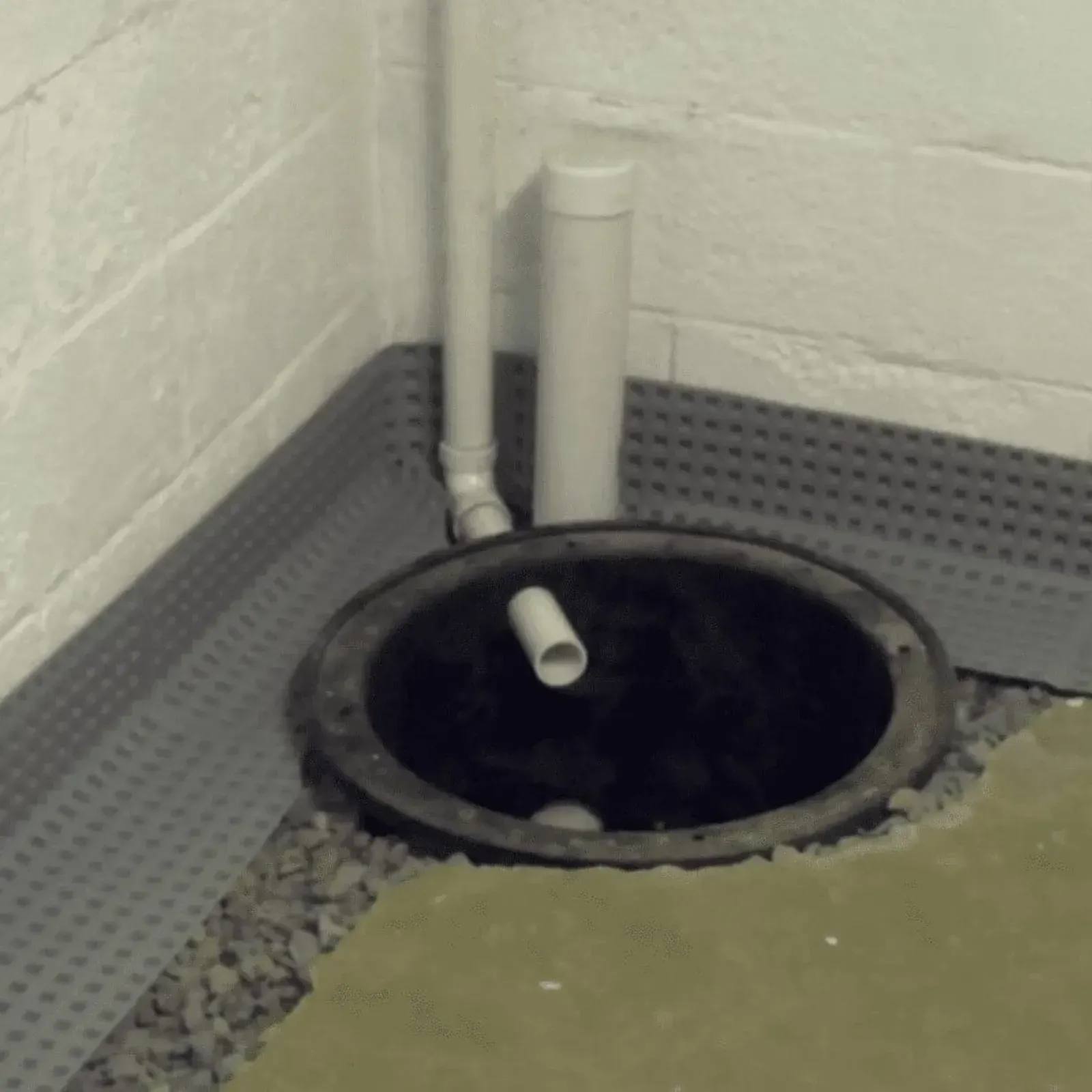
A typical interior system includes a drainage channel along the affected perimeter, a sump basin and pump sized to the volume of water the basement actually produces, and a discharge line routed away from the foundation so the water does not cycle back in.
Depending on the diagnosis, this can be paired with a vapor barrier on exposed walls, crack injection at specific failure points, or if the basement connects to an unfinished crawl space with its own moisture problem.
We size every component to what the evaluation finds — a single-wall cove joint issue does not need the same system as a full-perimeter, high-water-table basement.
Foundation Type Changes the Approach
Philadelphia's older rowhomes frequently sit on rubble-stone or brick foundations, often with a party wall shared between two properties — a different structure than the poured concrete or block foundations common in post-war developments like Levittown.
Rubble-stone walls are more porous and more likely to leak through the wall itself rather than concentrating at the cove joint.
Block foundations in 1950s and 1960s Lower Bucks County developments tend to fail through the hollow cores of the block or at mortar joints, and often have little original drainage since it was not required at the time.
Knowing which foundation type is behind the wall changes where we put the drain, not just whether we recommend interior or exterior work.
Lifetime Warranty on Waterproofing Systems
Waterproofing systems installed by Elite Basement Solutions carry a lifetime warranty. This warranty covers the system itself — it does not extend to foundation repair, basement finishing, or mold remediation performed as separate scopes of work, and it is not transferable to a new owner if the home is sold. We are specific about that scope so there is no confusion later about what the warranty actually covers.
Related Services
Waterproofing your basement rarely stands alone as a single scope of work. Depending on what your evaluation finds, your project may also involve:

French Drain Installation
The interior or exterior drainage line that carries water away from the foundation to a sump basin or gravity discharge point.

Crawl Space Encapsulation
Sealing an unfinished crawl space that is feeding moisture into an adjoining basement.

Foundation Crack Repair
Epoxy or polyurethane injection for cracks that are a structural or water-entry concern rather than a drainage issue.

Mold Remediation
Addressing the conditions mold needs once a moisture source has been present in the basement for a period of time.

Sump Pump Installation
See more completed installations on the
project gallery
page.
Serving Bucks County and Philadelphia
Service Areas
Elite Basement Solutions is based in Feasterville-Trevose and waterproofs basements throughout Bucks County and Philadelphia, including the Route 1 corridor, the Delaware River towns, Northeast Philadelphia, and the older rowhome neighborhoods closer to the city center. We also serve Montgomery, Chester, and Delaware counties, PA, and all of New Jersey.
We are licensed and insured in both states — PA HIC #PA209149 and NJ HIC #13VH14034100 — and offer emergency service available 24/7 for active flooding situations, in addition to scheduled evaluations and installations. Commercial property managers can find details specific to occupied-building work on the
commercial waterproofing page.
Thanks! We'll be in touch to schedule your free basement evaluation.
What Basement Waterproofing Costs
Waterproofing cost depends on whether the job is interior or exterior, how much of the perimeter needs drainage, and the condition of any existing sump system. See the
basement waterproofing cost page for a full breakdown of what moves the price up or down, or request an evaluation for a number specific to your basement.
Frequently Asked Questions
Get answers to common questions about basement waterproofing and foundation repair in Bucks County and Philadelphia.
What causes basement waterproofing problems in Bucks County?
Wet basement problems in Bucks County are most often caused by hydrostatic pressure building up in the clay-heavy soils common throughout the Route 1 corridor and areas near Neshaminy Creek. Clay drains slowly, so water from rain and snowmelt sits against the foundation wall under pressure for days after a storm, and it finds its way in through the cove joint, through porous block, or through tie-rod holes left from the original foundation pour.
Aging infrastructure adds to the problem. Many homes in this area were built before modern foundation drainage was standard, so the original clay drain tile, if it exists at all, has often collapsed or clogged after decades underground. Grading that has settled toward the house over time, and downspouts that were never extended away from the foundation, both add more water at the foundation than the house was built to handle.
The most misdiagnosed source of basement waterproofing problems in this region is the cove joint — the seam where the wall meets the floor — which homeowners often mistake for a failing wall when it actually just needs a properly installed interior drain.
An on-site evaluation identifies which of these mechanisms is at work in your specific basement. Call (800) 902-5311 to schedule one.
What is the difference between interior and exterior basement waterproofing?
Interior basement waterproofing manages water after it reaches the foundation wall, using a drainage channel along the interior perimeter of the basement connected to a sump pump, while exterior basement waterproofing intercepts water outside the foundation before it ever reaches the wall, using excavation, a footing drain, and a waterproof membrane applied to the exterior wall surface.
Interior systems are less invasive and typically less expensive, since the work stays inside the basement and does not disturb landscaping or require excavation equipment.
They are the right fit for most cove-joint seepage and general hydrostatic pressure situations, which cover the majority of wet basement calls in Bucks County and Philadelphia.
Exterior systems are more invasive and more costly but are necessary when the foundation wall itself is deteriorating, bowing, or showing structural movement that an interior drain cannot address, or in situations where there is no accessible interior floor space to work with.
We evaluate the specific condition of your foundation wall and the pattern of water entry before recommending one approach over the other, rather than defaulting to whichever system is easier to sell. A free on-site evaluation determines which approach fits your basement — call (800) 902-5311.
How long does a basement waterproofing system last?
A properly installed basement waterproofing system is designed to last for the life of the home, which is why Elite Basement Solutions backs its waterproofing systems with a lifetime warranty.
The system itself — the drainage channel, sump basin, and discharge components — is built from materials designed not to clog or degrade under normal operating conditions over decades of use.
The component most likely to need attention over time is the sump pump itself, since pumps are mechanical devices with a finite service life depending on how often they run and the quality of the unit installed. Battery backup systems also need periodic battery replacement to stay reliable during outages, which is often when a sump pump is needed most.
The lifetime warranty on our waterproofing systems covers the drainage system itself; it does not extend to foundation repair, basement finishing, or mold remediation performed as a separate scope of work, and it is not transferable if the home changes ownership. Ask about warranty specifics during your free evaluation.
Can I waterproof my basement myself, or do I need a contractor?
Some basement waterproofing tasks are reasonable for a homeowner to handle, but a full interior or exterior drainage system generally requires a contractor with the equipment and experience to do it correctly. Extending downspouts, regrading soil near the foundation so it slopes away from the house, and sealing minor surface cracks with a masonry sealant are all things a homeowner can often do without professional help, and they sometimes resolve a mild seepage problem on their own.
A full interior French drain system involves cutting concrete along the basement perimeter, installing drainage piping below the slab at the correct pitch, and properly sizing a sump basin and pump — work that requires specific tools and an understanding of how water needs to flow through the system. Exterior waterproofing involves excavation next to a foundation wall, which carries real risk of damaging the wall or nearby utility lines if not done correctly.
Misdiagnosing the water source is the most common and costly DIY mistake — treating a cove joint seepage problem with a wall sealant, for example, which does not address where the water is actually entering. A free on-site evaluation identifies the actual cause before you spend money on a fix that may not solve the underlying problem. Call (800) 902-5311}.
Does basement waterproofing come with a warranty?
Yes. Waterproofing systems installed by Elite Basement Solutions carry a lifetime warranty covering the drainage system itself. This warranty is specific to the waterproofing system — it does not cover foundation repair, basement finishing, or mold remediation work performed separately, and it is not transferable to a new owner if the home is sold.
We keep the scope of the warranty specific because a basement project can involve several different types of work at once, and a homeowner should know exactly what is and is not covered for each piece. If your project also includes foundation crack repair or bowing wall correction alongside waterproofing, those repairs are addressed under the terms specific to that work, which we walk through separately during your evaluation.
Details on what the lifetime warranty covers, including any conditions tied to maintaining coverage, can be walked through directly during your free on-site evaluation. Call (800) 902-5311 with questions about warranty coverage on a specific project.