
Crawl Space Encapsulation and Waterproofing
Crawl space encapsulation in Philadelphia and Bucks County homes usually gets treated as a storage problem — a damp, low space nobody looks at. It is actually an air quality problem for the entire house above it, and understanding why changes how you think about whether encapsulation is worth doing and how much of it you actually need.
The Stack Effect:
Why Crawl Space Air Ends Up in Your Living Room
Warm air rises. As it rises through a house, it exits through the attic, the roofline, and gaps around upper-floor windows and doors, and that departing air has to be replaced by air pulled in from somewhere lower in the structure. In most homes, that replacement air is drawn up from the crawl space, through the floor joists, subfloor seams, and any gaps around plumbing and duct penetrations, and into the living space above.
This continuous upward pull is known as the stack effect, and it means the air quality of a crawl space is not contained to the crawl space. Studies conducted by building science researchers have found that a meaningful share of the air inside the living areas of a house with a vented crawl space originated in that crawl space. If the crawl space is damp, musty, or has visible mold on the joists, that air, and whatever it is carrying, is moving into the rooms where a family spends most of its time.
This is the argument for crawl space encapsulation that matters most: it is not primarily about protecting the wood structure underneath the house, though that matters too. It is about controlling the air the house breathes.
Vented vs. Sealed: An Honest Comparison
A vented crawl space, the traditional building-code default for decades, uses foundation vents to allow outside air to circulate through the space, in theory drying it out. In practice, in the humid mid-Atlantic climate, venting often does the opposite in summer — warm, humid outside air enters the cooler crawl space and condenses on framing and ductwork, adding moisture rather than removing it. Ground moisture rising through exposed dirt floors compounds the problem regardless of ventilation.
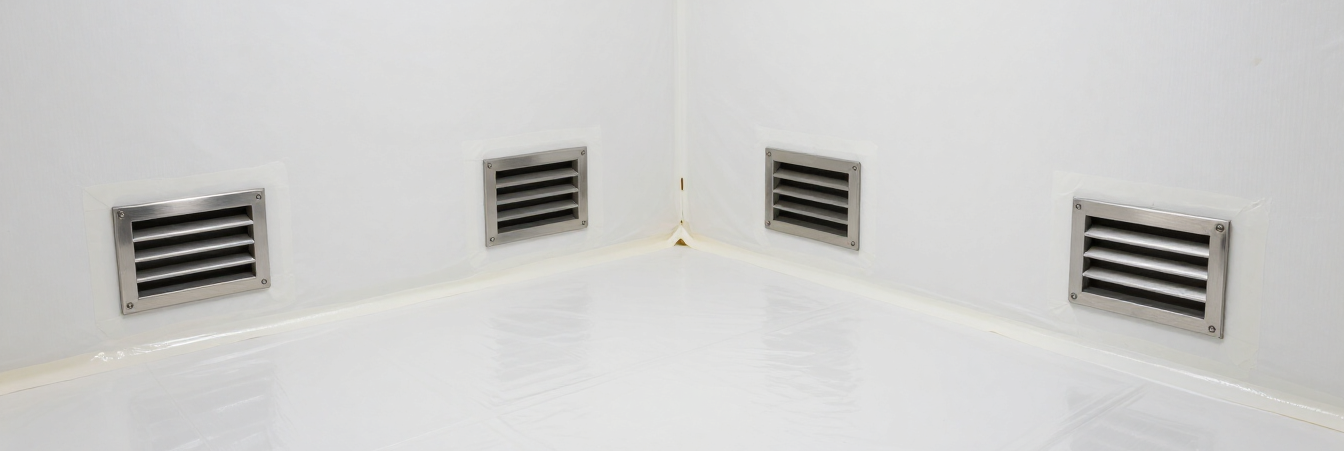
A sealed crawl space closes the foundation vents, covers the ground and walls with a heavy vapor barrier, and typically adds a dehumidifier to actively control relative humidity year-round. This addresses both the ground moisture and the seasonal condensation problem that vented crawl spaces struggle with in this region. It is the approach we recommend for the large majority of Bucks County and Philadelphia-area crawl spaces, for exactly the stack-effect reason above — sealing the space stops that damp air from being pulled into the house.
We say "large majority" and not "always" deliberately. A crawl space that is genuinely dry, well above the water table, with no history of moisture or pest issues, may not need the full sealed-and-dehumidified treatment. Encapsulation gets over-specified when it is sold as a default upgrade rather than a response to an actual moisture condition — part of our free on-site evaluation is telling you honestly which category your crawl space falls into before we quote anything.
What Full Encapsulation Includes
A properly installed crawl space encapsulation system is several components working together, not a single product.
Vapor Barrier
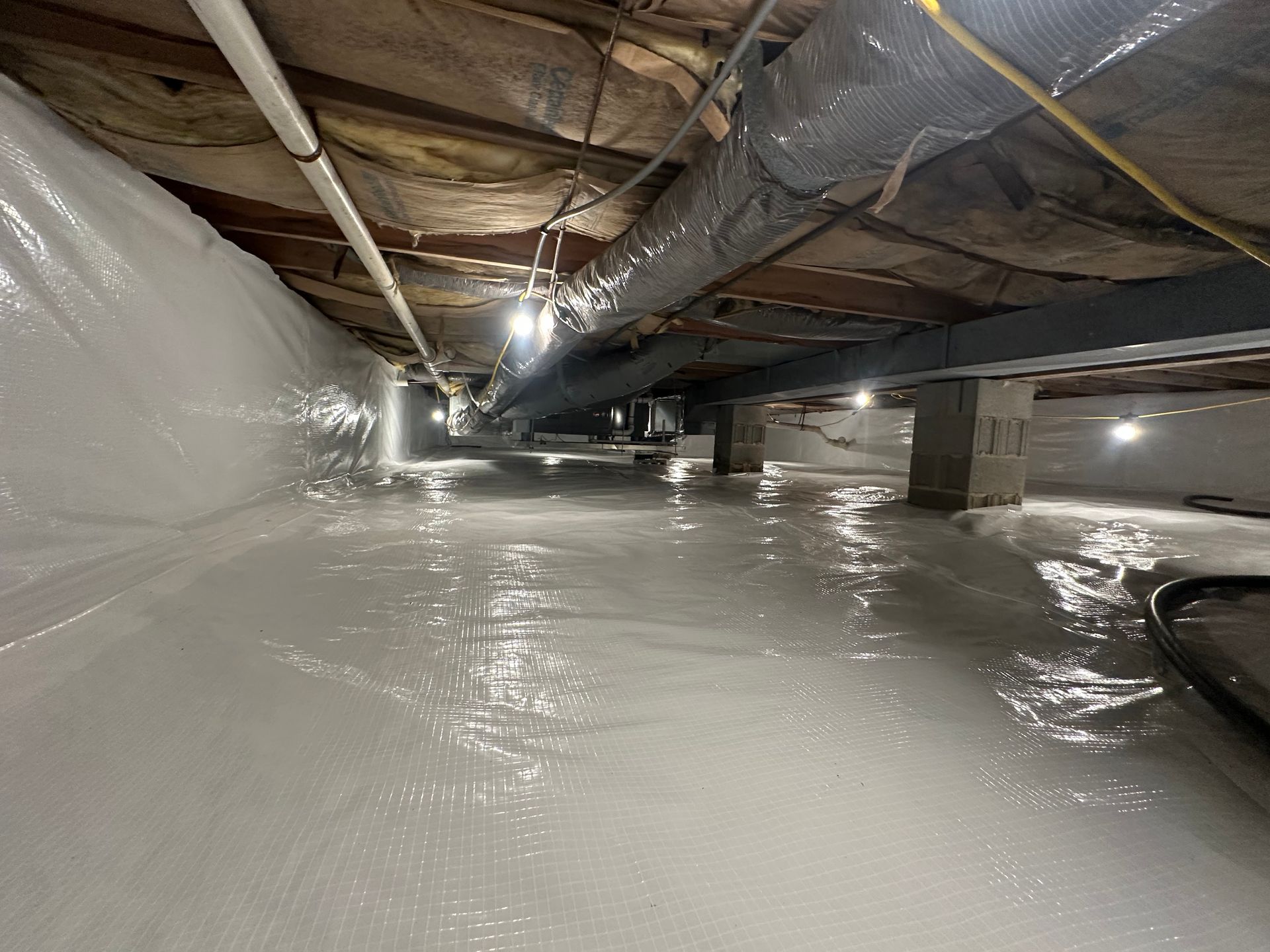
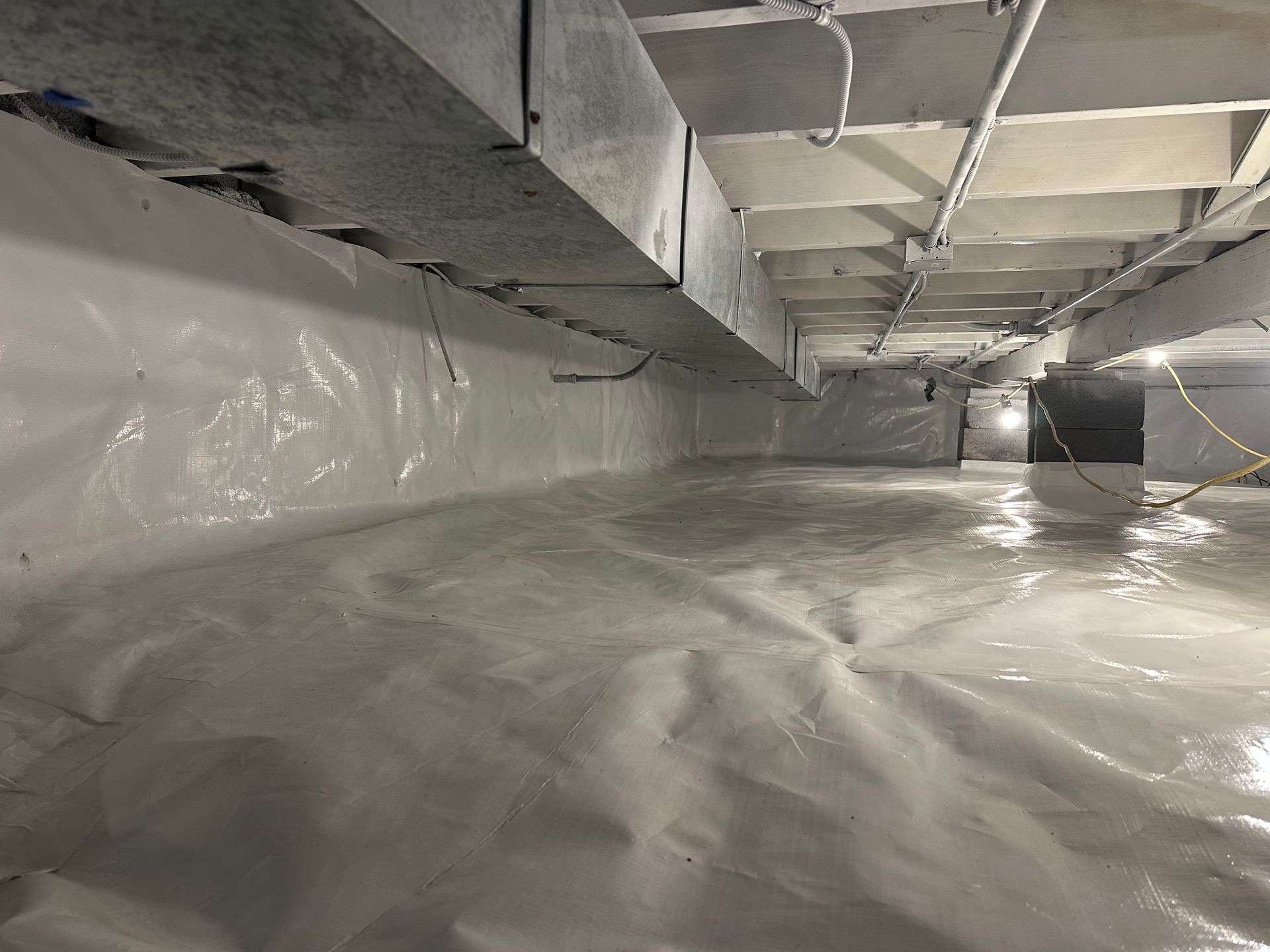
A heavy-duty barrier, measured in mil thickness, covers the entire ground surface and extends up the foundation walls, sealed at all seams and around every pier and support column. Thinner barriers puncture and degrade faster; we install barriers thick enough to hold up under foot traffic during future service visits.Rim Joist Insulation
The rim joist, where the floor framing meets the foundation wall, is a major, often-overlooked source of both air leakage and condensation. Insulating and sealing it as part of the encapsulation keeps conditioned air where it belongs and reduces condensation risk at that joint.Drainage
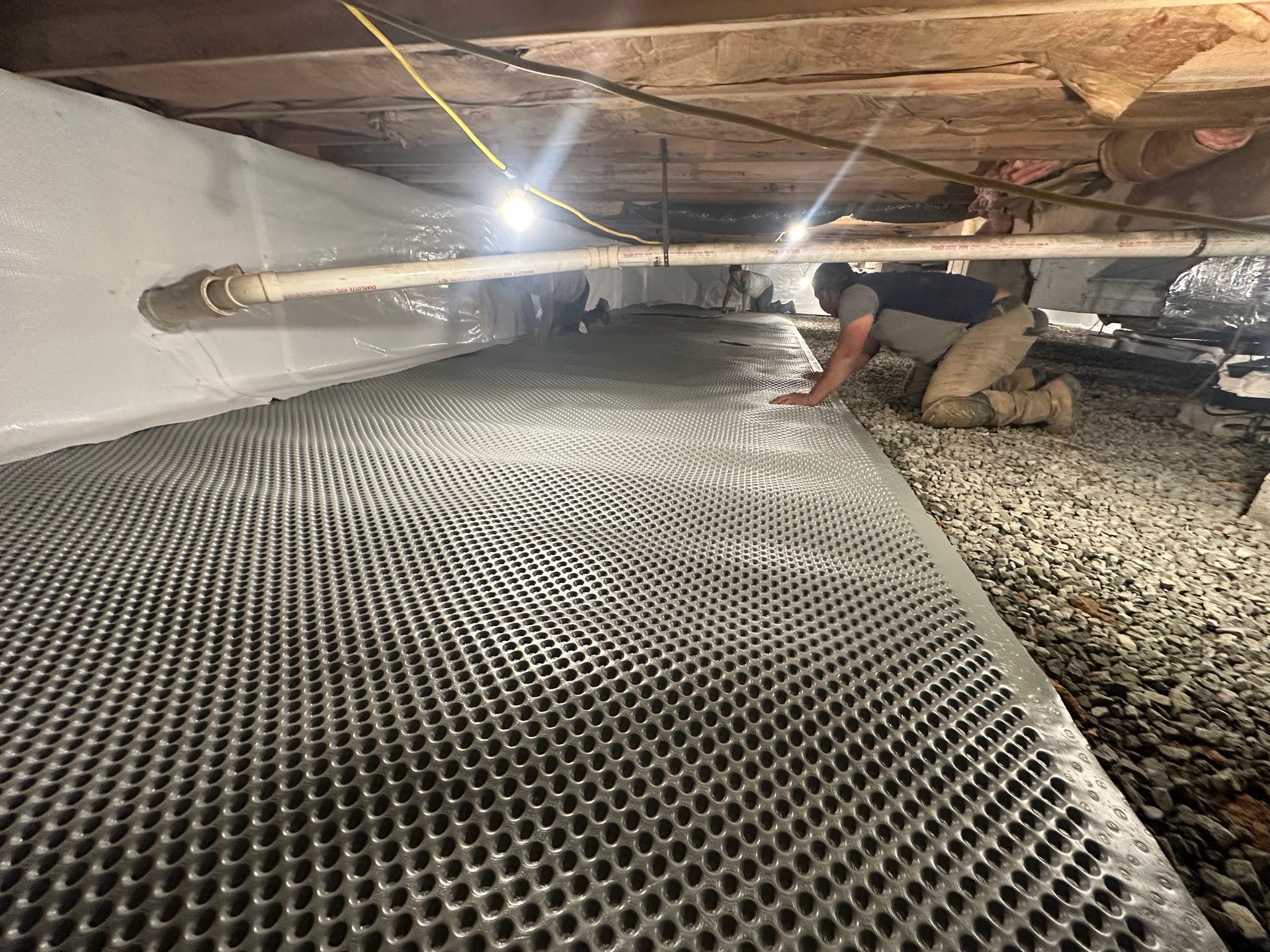
If the crawl space has any history of standing water or a high water table, drainage matting and a sump in the crawl space are added beneath the vapor barrier to collect and remove water before it can pool, rather than sealing a barrier over an active water problem.Dehumidification
A dedicated dehumidifier, sized to the crawl space's volume, maintains relative humidity in a range that prevents condensation and mold growth on framing without relying on outside air exchange.Sealed Access Hatch
The access point is sealed and insulated to match the rest of the encapsulated envelope, an unsealed hatch undermines the whole system by giving outside air a direct path back in.
What Encapsulation Does — and Does Not — Solve
Encapsulation addresses moisture, humidity, condensation, and the air-quality consequences of the stack effect. It reduces the conditions that allow mold to grow on joists and subflooring by controlling the humidity mold needs to establish itself, and it stops ground moisture and seasonal condensation at the source rather than treating symptoms upstairs.
Encapsulation is not a radon mitigation system. Radon is a soil gas that requires its own dedicated mitigation system, with its own fan and venting, to address, sealing a crawl space does not test for, remove, or reduce radon on its own, and a radon-mitigation claim has no place in an encapsulation conversation. If radon is a concern for your property, that requires independent testing and a separate mitigation approach.
If you're seeing visible mold growth on joists or a musty smell that's noticeable throughout the house, encapsulation addresses the moisture conditions that allow that growth to continue, see our mold remediation page for how we handle existing growth directly. And if the crawl space connects to or sits beside a basement with its own water intrusion, the two are often part of one basement waterproofing plan rather than separate problems.
Elite Basement Solutions serves Philadelphia, Bucks, Montgomery, Chester, and Delaware counties in Pennsylvania, and all of New Jersey (statewide). Licensed and insured, PA HIC #PA209149, NJ HIC #13VH14034100. Free on-site evaluation. Financing options available.
Frequently Asked Questions
What is crawl space encapsulation and do I need it?
Crawl space encapsulation is the process of sealing a crawl space against outside air and ground moisture — closing foundation vents, covering the ground and walls with a heavy vapor barrier, and typically adding a dehumidifier to control humidity year-round. It replaces the traditional vented approach, which relies on outside air circulation that often adds humidity rather than removing it in our climate.
Whether you need it depends on your crawl space's condition and how it connects to the rest of the house. Because of the stack effect — the continuous upward pull of air from lower parts of a house into the living space above — a damp or musty crawl space is not just a storage-area problem, it's an air-quality condition affecting the rooms where you spend time. Visible moisture, a musty smell, condensation on ductwork, or mold on joists are all signs encapsulation would address a real, active problem.
Not every crawl space needs full encapsulation. One that's genuinely dry with no moisture history may not require the complete sealed-and-dehumidified system. A free on-site evaluation tells you honestly whether your crawl space needs the full system, a partial fix, or nothing at all. Call (800) 902-5311.
How much does crawl space encapsulation cost?
Crawl space encapsulation cost depends on the square footage being encapsulated, the mil thickness of vapor barrier used, whether drainage matting and a sump are needed for standing water, and whether a dehumidifier is included. A crawl space with easy access and no existing moisture problem costs less than one requiring drainage work first or maneuvering around low clearances and ductwork.
Rim joist insulation and access hatch sealing are typically included in a full system and add to the total, but they are not optional — an encapsulation missing either one leaves a direct path for outside air to undermine the sealed barrier. A vapor barrier alone without dehumidification costs less but does not address seasonal humidity the way a complete system does.
We provide exact pricing only after a free on-site evaluation, since conditions vary enormously between properties.
Financing options are available. Call (800) 902-5311 for a quote specific to your crawl space.
Does crawl space encapsulation help with mold?
Encapsulation helps by controlling the humidity and moisture conditions that allow mold to grow and continue growing on crawl space framing and joists. Mold needs sustained moisture to establish and spread, and a properly encapsulated crawl space with a vapor barrier and dehumidification removes the ground moisture and condensation that create those conditions.
Encapsulation is a prevention and condition-control measure, not a mold removal service. If mold is already visibly present on joists or subflooring, that existing growth needs to be physically addressed separately — see our mold remediation page for how we handle visible growth. Sealing a barrier over active mold does not remove it.
The two services work together in order: address existing visible growth first, then encapsulate to control the moisture that allowed it to grow, preventing recurrence. Because a damp crawl space affects air quality throughout the house via the stack effect, homeowners dealing with a persistent musty smell upstairs often find that combination is what actually resolves the issue.
What is the difference between a vapor barrier and full encapsulation?
A vapor barrier is a heavy plastic sheet, measured in mil thickness, laid over the ground of a crawl space to block ground moisture from evaporating up into the space. On its own, it addresses one specific moisture source — the soil beneath the house — but leaves foundation vents open and does nothing about seasonal condensation from humid outside air.
Full encapsulation includes the vapor barrier as one component, but adds several others: sealing it up the foundation walls rather than stopping at the floor, closing the foundation vents, insulating the rim joist, sealing the access hatch, and typically adding a dedicated dehumidifier to actively control relative humidity year-round rather than relying on the barrier alone.
The practical difference shows up in humid summer months. A vapor barrier without the rest of the system still allows warm, moist outside air to enter through open vents and condense on cool framing — exactly the seasonal moisture problem that drives mold growth and the musty air the stack effect pulls upward. A vapor barrier alone is sometimes appropriate for a crawl space with no vent-driven condensation history, but for most homes here, the full sealed system addresses both moisture sources.
Does encapsulating a crawl space help with radon?
No. Crawl space encapsulation is not a radon mitigation system, and sealing a crawl space does not test for, reduce, or remove radon gas on its own.
Radon is a naturally occurring soil gas that requires a dedicated mitigation system — typically a fan and venting setup designed to draw radon from beneath the foundation and exhaust it above the roofline.
It's a common and understandable point of confusion, since both crawl space moisture and radon involve air moving up from beneath the house, and sealing work sounds like it should address both.
But encapsulation is designed around moisture, humidity, and the air-quality effects of the stack effect — it is not engineered or tested as a radon barrier, and treating it as one could leave an actual radon concern unaddressed.
If radon is a concern for your property, independent testing is the necessary first step, followed by a dedicated mitigation system if levels warrant it — a separate scope of work from encapsulation.
We're happy to discuss how encapsulation fits alongside a radon mitigation system already in place, but we don't make radon claims about the encapsulation work itself.