
What Basement Waterproofing Actually Costs in Bucks County & Philadelphia
Basement waterproofing cost is the question almost every homeowner asks first and almost no contractor answers plainly. Search around Feasterville-Trevose, Bensalem, or the Route 1 corridor and you will find a dozen sites that talk about "affordable solutions" and "free inspections" without a single number attached.
That is not an accident. Pricing a wet basement without seeing it is genuinely hard to do responsibly, but that does not mean homeowners deserve to walk into an estimate blind.
This page lays out real regional ranges for the systems used to waterproof a basement in southeastern Pennsylvania and South Jersey — interior French drains, sump pumps, exterior excavation, and full combined systems. These are regional ranges drawn from the kind of work done across Bucks County, Montgomery County, and Philadelphia, not a quote for your specific basement.
What you pay depends on your foundation, your soil, and how the water is getting in, and none of that shows up on a website. Read this before your first estimate so you know what questions to ask and what a number should actually include.
Why Waterproofing Costs Vary So Much From House to House
Two basements on the same street can have completely different price tags for what looks like the same problem. A rowhome in Northeast Philadelphia with a shared party wall and no exterior access is a different job than a detached colonial in Newtown with a full yard to work in. Below is what actually moves the number.
Linear Footage of the Perimeter
Most interior and exterior systems are priced per linear foot, not per square foot of floor. A small Cape Cod basement might need forty linear feet of drain. A sprawling Bucks County rancher might need one hundred forty. That alone can be the difference between a five-figure job and a job that costs three times as much.Depth and Soil Conditions
Homes near Neshaminy Creek, the Delaware River floodplain, or anywhere with a naturally high water table often need deeper excavation, more aggressive drainage, or a second sump pump to keep up. Clay-heavy soil holds water longer than sandy soil and can require a different drain design entirely.Access
Exterior work depends on what is between the foundation and the property line. A house with mature landscaping, a paver patio, or a narrow side yard costs more to excavate than one with open, unobstructed access. Interior work sidesteps this entirely, which is one reason it is usually the lower-cost option.What Is Already Down There
A finished basement adds cost because flooring, drywall, and framing may need to come out before the crew can reach the foundation wall. An unfinished basement is the cheapest scenario to work in.Number of Sump Pumps and Discharge Points
A single-pump setup with a simple gravity discharge costs less than a system with a battery backup pump, a dedicated discharge line routed away from the foundation, and a second pit for a high-water-table lot.Permits
Most PA and NJ municipalities require a permit for exterior excavation and some require one for interior drain systems tied to a sump discharge. Permit fees are usually a few hundred dollars, but they are a real line item, and a contractor who never mentions permits is a contractor worth asking about.
The ranges below reflect what these systems typically run across the greater Philadelphia and Bucks County market. Treat them as a starting point for your own research, not a quote — see
our basement waterproofing overview
for how we diagnose before we price anything.
Basement Waterproofing Cost by System Type
Interior French Drain System
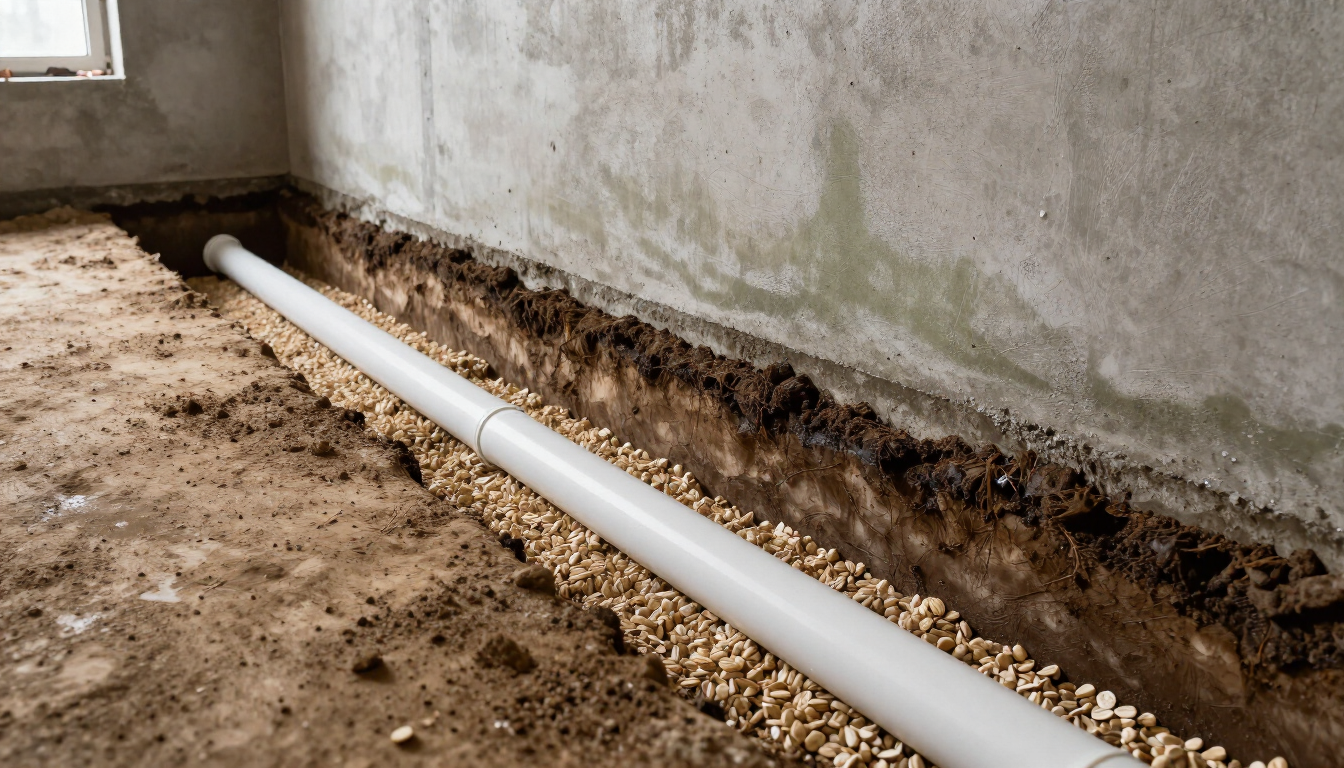
An interior French drain is the most common fix for water entering along the base of the foundation wall — the classic "water comes in where the wall meets the floor" pattern.
The crew cuts a channel along the interior perimeter, sets perforated pipe below the slab, and routes water to a sump pit.
Regional range: roughly $45 to $95 per linear foot installed, which puts a typical full-perimeter system in the range of $4,000 to $12,000 for an average single-family basement.
Rowhomes and smaller footprints often land at the lower end; larger homes or homes needing a full-perimeter drain instead of a partial run land higher.
Sump Pump Installation
A sump pump is often installed alongside a French drain, but it is sometimes a standalone job — replacing a failing pump, adding a backup system, or installing a pump for the first time in a basement that never had one.
Regional range: roughly $1,200 to $4,500 depending on pump type and backup configuration. A primary pump with a simple discharge sits at the low end.
A primary pump plus a battery backup system — which matters in this region given how often storms knock out power right when you need the pump most — pushes toward the higher end.
Exterior Excavation and Waterproofing
Exterior waterproofing addresses the problem from outside the foundation wall, excavating down to the footing, applying a waterproof membrane, and installing exterior drain tile. It is more invasive and more disruptive to landscaping than interior work, but it stops water before it ever reaches the wall.
Regional range: roughly $75 to $200-plus per linear foot, which typically puts a full-perimeter exterior job at $10,000 to $25,000 or more. The spread is wide because depth, soil, and access swing this cost more than any other system on this list. A walkout basement with easy grading costs far less to excavate than a foundation buried under a deck or a mature landscape bed.
Full Combined System
Many basements need more than one fix at once, an interior drain paired with a sump pump and discharge line, sometimes with crack injection or exterior grading corrections included. This is the most common real-world scope for a basement with an active water problem rather than a single isolated leak.
Regional range: roughly $6,000 to $15,000 for a typical Bucks County or Philadelphia single-family basement, with larger homes, multiple sump pits, or combined interior-and-exterior scopes running $15,000 to $25,000 or more.
What Actually Moves Your Number Up or Down
Beyond the system type itself, a handful of site conditions consistently change the final price. Water table depth is the biggest one, homes closer to Neshaminy Creek or low-lying areas near the Delaware often need more robust drainage than homes on higher, well-drained lots in places like Newtown or Doylestown. Foundation type matters too: poured concrete, block, and stone foundations each drain differently and sometimes need different prep work before a system goes in.
Finished basements add cost because framing, drywall, and flooring may need to be removed and later restored, restoration is a separate line item most homeowners do not budget for until it is quoted. And scope creep is real: a job that starts as "just the one wet corner" sometimes becomes a full-perimeter recommendation once a crew opens the wall and sees how far the moisture has traveled. That is not a bait-and-switch when it is explained and documented. It is a bait-and-switch when it is not.
What a Lowball Quote Usually Means
If one estimate comes in well below every other bid you have collected, it is worth asking why before you sign anything. A few honest possibilities, roughly in order of how often we see them:
The scope is smaller than it should be, a partial drain run instead of full perimeter, or a system sized for a smaller problem than the one actually in the wall. The materials are lower grade, thinner pipe, a residential-grade sump pump rated for light duty, or no battery backup where the site clearly needs one.
The warranty is thin or nonexistent, which shifts risk back onto you the first time the system underperforms. Or the number is a placeholder designed to get a signature, with the real price arriving as "unexpected" add-ons once the crew is already in your basement and you are less likely to walk away.
None of this means the lowest bid is always wrong. It means a number without a written, itemized scope behind it is not a number you can compare to anything.
Thanks! We will be in touch shortly.
Get a Written, Itemized Estimate, Not a Verbal Guess
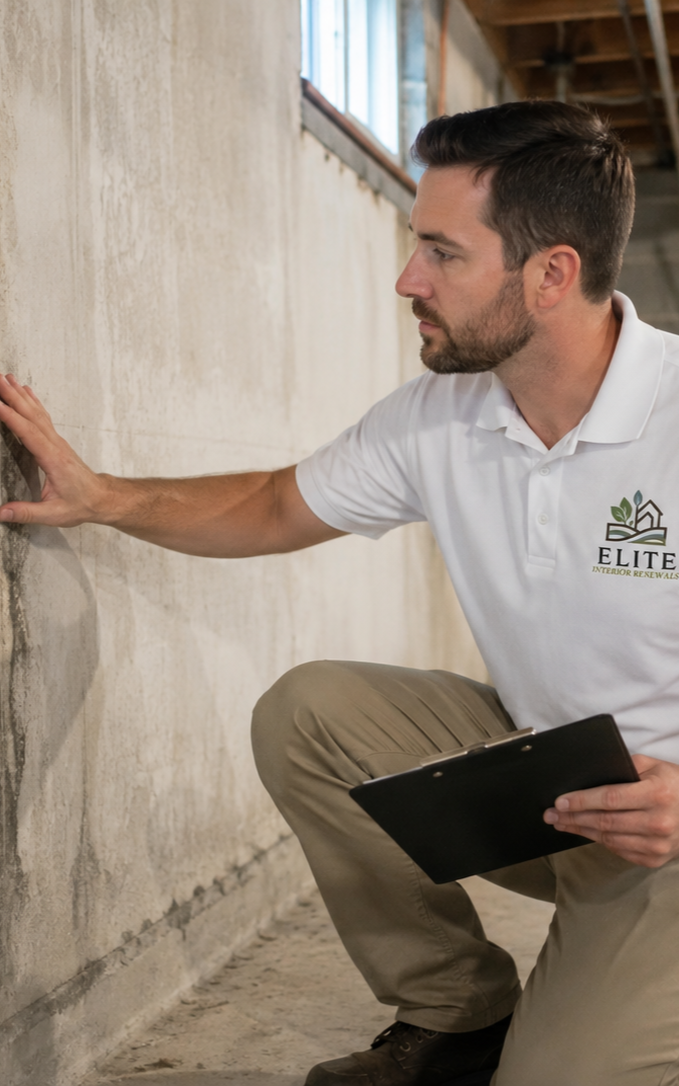
An estimate that means anything is one you can read, not one you are told over the phone. Before we quote a system, we walk the basement, identify where the water is actually entering, and explain the mechanism before we recommend a fix. The estimate that follows is free, on-site, and itemized, system by system, with linear footage, pump specifications, and what is and is not included in writing.
Every waterproofing system we install carries a lifetime warranty against the specific failure it is designed to prevent, and financing options are available for homeowners who would rather spread the cost than pay it all at closing. Read what homeowners across Bucks County and Philadelphia have said about the process in our reviews. (reviews)
If your basement has a foundation problem alongside the water problem, a crack, a bowing wall, or settlement, see what foundation repair costs in this region for those ranges separately, since waterproofing and structural repair are priced differently and often quoted as two distinct scopes.
Frequently Asked Questions
How much does basement waterproofing cost in 2026?
Across Bucks County, Montgomery County, and Philadelphia, basement waterproofing typically runs from about $2,500 for a small, localized fix, a short drain run or a single sump pump, up to $25,000 or more for a full-perimeter exterior system on a large home with difficult access.
Most single-family basements needing a complete interior drain-and-sump system land somewhere in the $6,000 to $15,000 range, which is the most common real-world scope in this market.
These are regional ranges, not a quote for your home, the only way to get an accurate number is a free on-site evaluation, because linear footage, depth, and access change the price more than anything else.
What tends to surprise homeowners most is not the number itself but how much it varies based on things they cannot see from inside the basement, like soil type and water table depth.
A contractor who quotes a firm price before walking your basement and identifying the water's entry point is skipping a step. We diagnose first, then price the system that matches what we actually find, and we put that price in writing before any work begins.
What factors affect the cost of basement waterproofing?
The biggest factors are linear footage of the perimeter needing drainage, the depth and type of excavation required, and how easy the crew's access to the foundation is.
A house with a straightforward yard costs less to excavate than one with a patio, mature landscaping, or a narrow side yard blocking equipment.
Soil and water table matter too, homes near Neshaminy Creek or in low-lying floodplain areas often need more robust drainage than homes on higher, well-drained lots.
Whether the basement is finished or unfinished changes cost significantly, since finished space may need to be opened up and later restored.
The number of sump pumps and whether you add a battery backup, which matters given how often regional storms knock out power, also shifts the total.
Permit requirements, which vary by municipality across Bucks, Montgomery, and Philadelphia counties, add a smaller but real line item.
Finally, system type itself is the largest single variable: interior French drains are generally less expensive than full exterior excavation because they avoid disturbing the yard and require less earthwork.
Any estimate that does not walk through these factors specifically for your basement is not a complete estimate yet.
Is basement waterproofing worth the investment?
For a basement with an active or recurring water problem, waterproofing is generally worth the cost because the alternative, repeated water intrusion, causes ongoing damage that compounds over time: warped framing, damaged flooring, musty conditions, and in some cases foundation deterioration from constant moisture exposure.
A properly installed system addresses the source of water entry rather than masking symptoms, which is different from a patch job or a coat of waterproof paint that fails within a few seasons.
Waterproofing also matters at resale, a documented, warrantied system is something a home inspector and a buyer's agent will both notice, while a wet or previously wet basement without documentation is a common point of negotiation or lost deals in this market.
Whether it is worth it for your specific basement depends on the severity of the problem and how long you plan to stay in the home.
A basement with minor seasonal dampness may need a smaller-scope fix than a basement with standing water after every heavy rain.
That is why diagnosis comes before any recommendation, the honest answer to "is it worth it" depends on what is actually happening in your basement, not a general rule that applies to every house the same way.
Does homeowners insurance cover basement waterproofing?
Generally, no. Most standard homeowners policies treat basement water intrusion from groundwater, surface water, or seepage through the foundation as excluded, similar to how flood damage is excluded and requires separate flood insurance.
Waterproofing is typically classified as a maintenance and prevention measure rather than damage repair, and insurers generally do not cover preventive work regardless of cause.
Where coverage sometimes applies is the damage caused by water once it is inside, for example, if a sudden pipe burst floods a finished basement, the resulting damage to drywall or flooring may be covered even though the waterproofing system installed afterward to prevent recurrence would not be.
Every policy is different, and endorsements like sump pump failure coverage or water backup riders exist specifically because standard policies exclude these scenarios by default.
Homeowners should check their specific policy language and talk to their agent before assuming either way, rather than relying on a general answer.
Because insurance rarely covers the system itself, financing options are available for homeowners spreading the cost, and a written, itemized estimate makes it easier to have that insurance conversation with accurate numbers in hand either way.
How can I pay for basement waterproofing if I cannot afford it upfront?
Financing is available through Green Sky for homeowners who need to spread the cost of a waterproofing system rather than paying the full amount upfront.
Beyond financing, a phased approach is sometimes reasonable for a basement that is not in active crisis, addressing the most urgent entry point first, such as installing a sump pump or a partial drain run in the worst-affected area, and completing the rest of the perimeter in a second phase.
This is not the right approach for every basement, since delaying a full-scope fix on a severe or worsening problem can allow more damage to accumulate in the meantime, but for a basement with a single identifiable weak point it can make a large project more manageable financially. We accept Visa, Mastercard, Discover, check, Zelle, and Venmo, and we discuss payment structure and any financing questions during the free on-site evaluation, not after a contract is signed.
What we do not recommend is choosing a contractor based solely on who offers the lowest monthly payment without comparing the actual scope of work behind each estimate, a smaller or thinner system financed over time can end up costing more in repeat repairs than a properly scoped system paid for directly.