
French Drains and Exterior Drainage Systems
Water finds the lowest point of resistance around a foundation, and in most Bucks County and Philadelphia homes, that point is the joint where the basement floor meets the wall. Exterior foundation drainage and interior
French drains are the two systems built to intercept that water before it becomes a wet basement — but they solve the problem from opposite sides of the wall, at very different costs. Basement waterproofing systems depend on getting this choice right, and getting it right starts with understanding what each system actually does.
This page covers both. Exterior drainage — footing drains, regrading, and downspout correction — intercepts water outside the foundation, before it ever reaches the concrete. Interior French drains work inside the basement, collecting water that has already reached the wall and routing it to a sump basin. Neither one is automatically the right answer, and neither one fixes every kind of water problem.
What an Exterior Drainage System Does
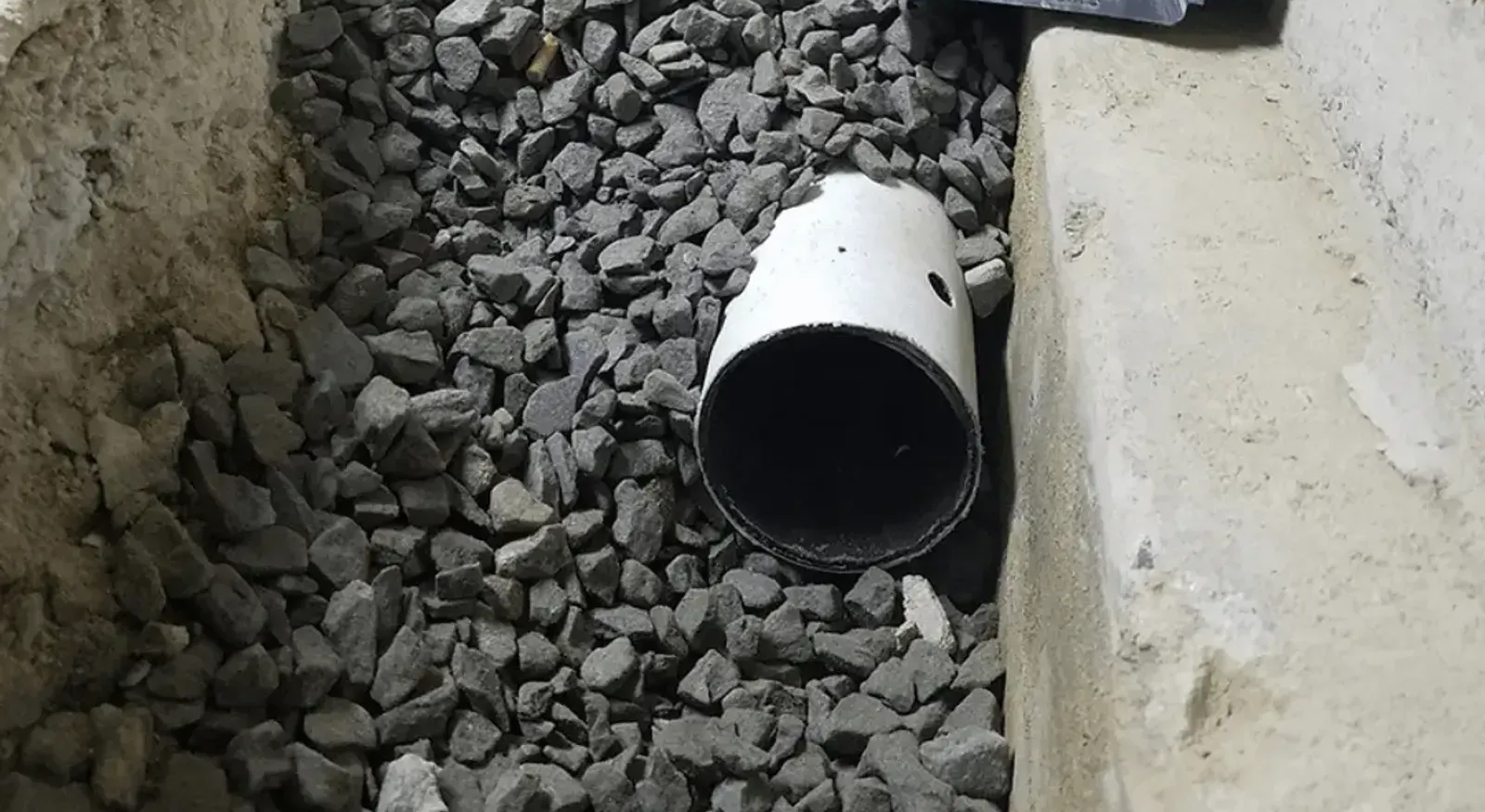
A properly functioning exterior drainage system starts with the footing drain — a perforated pipe laid alongside the base of the foundation footing, wrapped in filter fabric, and bedded in washed stone. Water moving through the soil enters the pipe, travels by gravity to a discharge point, and never reaches the foundation wall itself. On many homes built before the 1980s, this footing drain either was never installed, has collapsed, or has silted shut over the decades.
Exterior drainage work is not limited to the footing drain. Grading — the slope of the soil away from the foundation — does as much work as any pipe in the ground. A yard sloping toward the house, even by an inch over ten feet, pushes roof and rain water directly at the wall. Downspout drainage installation, extending discharge points away from the foundation, is often the single cheapest fix available and gets skipped more than anything else on this list.
The honest trade-off is disruption and access. Repairing a footing drain means exterior excavation — trenching down to the footing, which means landscaping or a deck may need to come out and go back. On some lots, buried utilities or a property line make full excavation impractical. Where access allows it, exterior drainage keeps water out of the wall entirely, rather than managing it after it gets in.
What an Interior French Drain Does
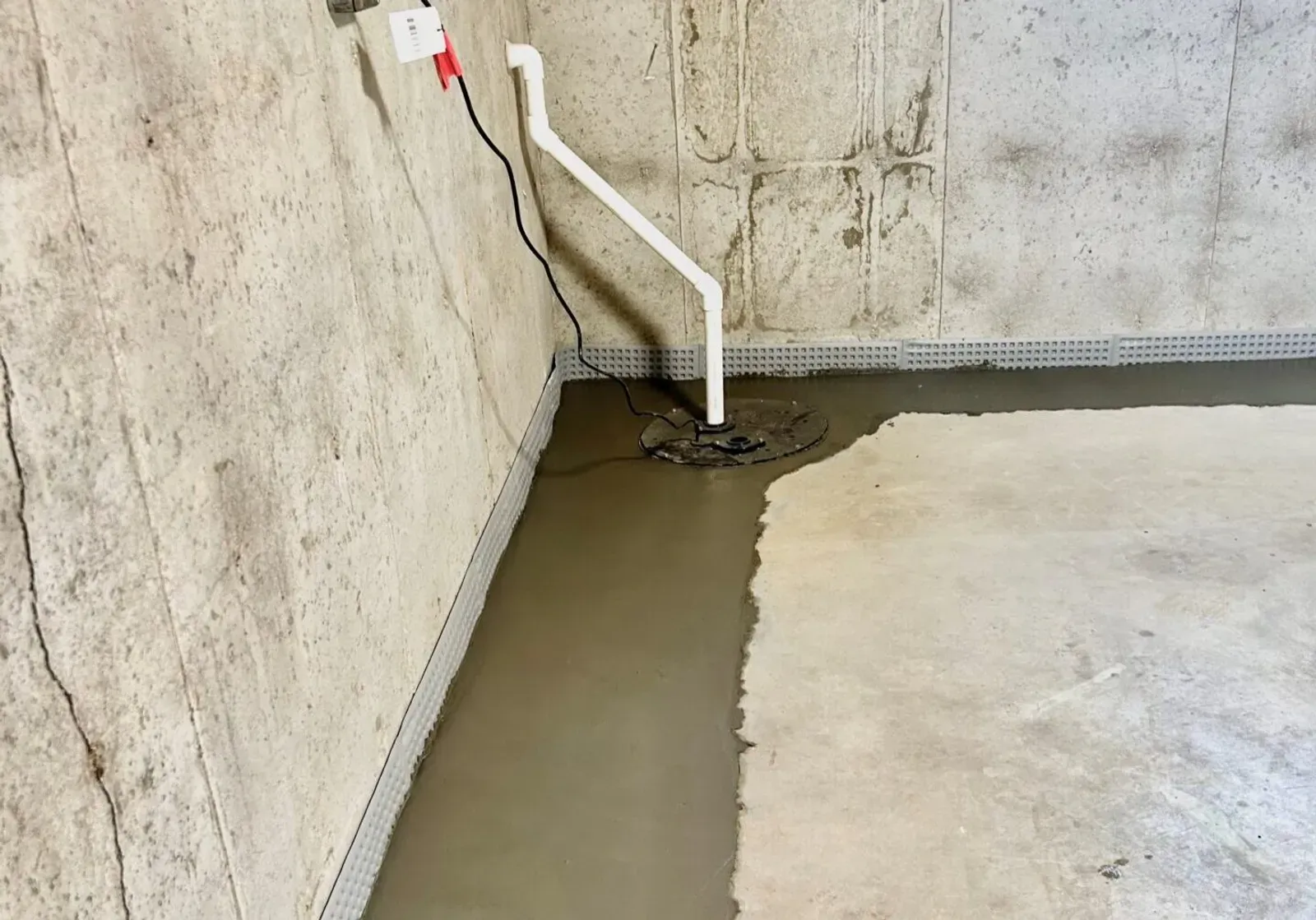
An interior drainage system is installed without exterior excavation. We jackhammer a trench along the interior perimeter of the basement floor, typically along the cove joint where hydrostatic pressure pushes water in first and set perforated pipe in washed stone below the slab. A vapor barrier tie-in connects the wall to the drain so water running down the block cavities is captured rather than seeping across the floor. The system discharges to a sump basin, where a sump pump lifts the water out and away from the foundation.
Interior French drain cost runs well below full exterior excavation on most homes, since there's no landscaping to remove or grading to restore. The trench is opened, the pipe and stone go in, and the concrete is patched in one to two days per typical basement — the speed and lower disruption is why interior is the standard recommendation here.
The honest limitation: an interior system does nothing outside the wall. It doesn't stop water from reaching the foundation — it manages what gets in. For a basement where grading or downspouts are actively driving water at the wall, interior drainage alone treats a symptom while the cause keeps pushing.
Interior vs. Exterior: The Real Comparison
Cost favors interior. An interior French drain, working from inside the basement, avoids exterior excavation, landscaping removal, and grade restoration — the largest cost drivers on any exterior drainage system. For a homeowner choosing between the two on price alone, interior wins most of the time.
Effectiveness at the source favors exterior. Exterior drainage stops water before it touches the foundation. Interior drainage lets water reach the wall and then manages it. Both approaches stop water from ending up on the basement floor, but only one keeps the wall itself dry and reduces the hydrostatic pressure acting on it over time.
Access decides it on some properties. A finished patio, an addition built over the footing line, or a shared property line with no room to trench can make exterior work impossible regardless of preference. On those lots, interior drainage is not a compromise — it is the only option that does not involve tearing out something permanent.
We diagnose before we recommend either one. On a free on-site evaluation, we identify exactly where water is entering — cove joint, wall crack, above-grade seepage, or a window well — because the entry point determines which system, or combination, actually solves the problem.
A French drain, interior or exterior, is a water-management system for water entering at or below the floor line. It does not solve every source of basement moisture, and pretending otherwise is how homeowners end up paying for a system that leaves the original problem in place.
What a French Drain Cannot Fix
Water seeping through the wall above the floor line.
This usually points to a wall crack, porous block, or efflorescence — the white, chalky mineral deposit left behind as water evaporates through concrete — none of which a floor-level drain intercepts. That calls for foundation crack repair or wall sealing, not drainage.
A failed grade or clogged downspout.
If the yard slopes toward the house or a downspout discharges at the foundation, regrading and downspout extension solve the problem directly and at a fraction of the cost of any drain installation. We say this plainly during every evaluation: if the fix is a $200 downspout extension, we tell you that before we quote a drainage system.
Groundwater under hydrostatic pressure with no discharge path.
A drain only works if water has somewhere to go. On a lot with a high water table and no adequate sump discharge, a drain without proper sump pump capacity backs up rather than draining.
Installation, Maintenance, and What to Expect
Clogging and maintenance are real considerations on any drainage system. Silt and mineral buildup can reduce flow through perforated pipe over years, particularly in clay-heavy Bucks County soil. Filter fabric wrapped around the stone bed slows this considerably but does not eliminate it. An interior system with a clean-out access point makes future maintenance straightforward; an exterior system without one may require re-excavation if it clogs.
Weep holes at the base of block foundation walls, where present, provide additional hydrostatic relief by letting water in the block cavities drain directly into the interior system rather than building pressure against the wall.
Concrete restoration follows any interior trench work — the slab is patched and floated to match the existing floor, and on exterior work, any excavated grade and landscaping is restored.
For a full breakdown of what these systems cost across our service area, see basement waterproofing cost guide.
Frequently Asked Questions
What is the difference between an interior and exterior French drain?
An interior French drain is installed inside the basement along the cove joint — the seam where the floor meets the wall — and collects water after it reaches that point, routing it to a sump basin.
An exterior drainage system, most often a footing drain, is installed outside the foundation alongside the footing and intercepts water in the soil before it ever reaches the wall.
The practical difference comes down to access, cost, and what you're trying to accomplish. Interior installation requires jackhammering a trench in the basement floor but no exterior excavation, so it's faster and less expensive on most homes.
Exterior installation requires excavating along the foundation wall, meaning any patios or plantings above the trench line must come out and go back, which costs considerably more.
Effectiveness differs too. Because exterior drainage stops water before it touches the foundation, it reduces hydrostatic pressure on the wall over time. Interior drainage manages water that's already reached the wall, controlling the symptom without changing what's happening outside.
The right choice depends on the entry point we identify during a free on-site evaluation, the home's grading, and what access the property allows.
How much does a French drain cost to install?
Interior French drain cost depends primarily on the linear footage of basement perimeter needing drainage, trench depth, and whether a new sump pump and basin are part of the scope. Exterior foundation drainage costs more than interior systems on comparable homes, because excavation, landscaping removal, and grade restoration add labor that interior work does not require.
Every quote follows a free on-site evaluation, because the actual driver of cost is not the drain itself — it's what has to happen to install it. A basement with easy access costs less than one requiring demolition around support columns or finished walls. An exterior job with a simple, open yard costs less than one requiring excavation around a deck or buried utility lines.
We don't provide ballpark numbers without seeing the site, since two basements of the same size can require very different scopes. See our basement waterproofing cost guide for general ranges. Financing options are available.
How long does exterior foundation drainage installation take?
Most exterior foundation drainage jobs take several days to complete, and the timeline depends heavily on the linear footage of foundation wall addressed, soil conditions, and what has to be moved or restored above the excavation.
A single-wall footing drain repair on an easily accessible section moves faster than a full-perimeter installation.
The work follows a sequence: excavating down to the footing, inspecting the existing drain condition, installing new perforated pipe wrapped in filter fabric and bedded in washed stone, backfilling, and restoring the grade and any landscaping removed to gain access. Weather plays a role too — excavation in saturated clay soil after heavy rain takes longer.
We walk through the expected timeline for your property during the free on-site evaluation, since a job description like "install a footing drain" covers a wide range of actual scopes. Interior French drain installation, by comparison, typically finishes within one to two days since there's no exterior excavation involved.
Do French drains clog over time?
Yes, both interior and exterior drainage systems can clog over time, though proper installation significantly slows how quickly this happens.
Fine sediment, silt, and mineral deposits can accumulate inside perforated pipe over years, particularly in clay-heavy soil common across Bucks County, gradually reducing how much water the pipe can move.
Filter fabric wrapped around the washed stone bed is the primary defense against clogging — it keeps fine soil particles out of the stone and pipe while still allowing water through.
A system installed without proper fabric, or with fabric that has degraded, is far more likely to silt in over a decade or two. This is one of the most common failure points we find in older homes with drains installed decades ago.
Interior systems have an advantage here: because they're accessible without excavation, a clean-out point can be built in, making clearing straightforward if flow slows. Exterior systems without an access point may require re-excavation to clear a clog, which is part of why we recommend interior systems as the default when access allows either option.
Can a French drain fix a wet basement?
A French drain fixes a wet basement caused by water entering at or below the floor line — most commonly at the cove joint, where hydrostatic pressure pushes groundwater in through the wall-floor seam. For that specific and very common failure mode, an interior or exterior drainage system is the standard, reliable fix.
It does not fix every cause of a wet basement, and we say this directly during every evaluation. Water seeping through the wall above the floor line usually points to a crack, porous block, or a coating failure — problems that call for foundation crack repair or wall sealing, not a floor drain. A yard that slopes toward the foundation or a downspout dumping water at the wall's base is often a grading fix costing a fraction of a full drainage system, and we'd rather fix a $200 downspout problem for $200 than sell an unnecessary drain.
Before we recommend any system, we find the actual entry point during a free on-site evaluation. That diagnosis, not a standard package, determines whether the right fix is a French drain, a grading correction, crack repair, or some combination. Call (800) 902-5311.